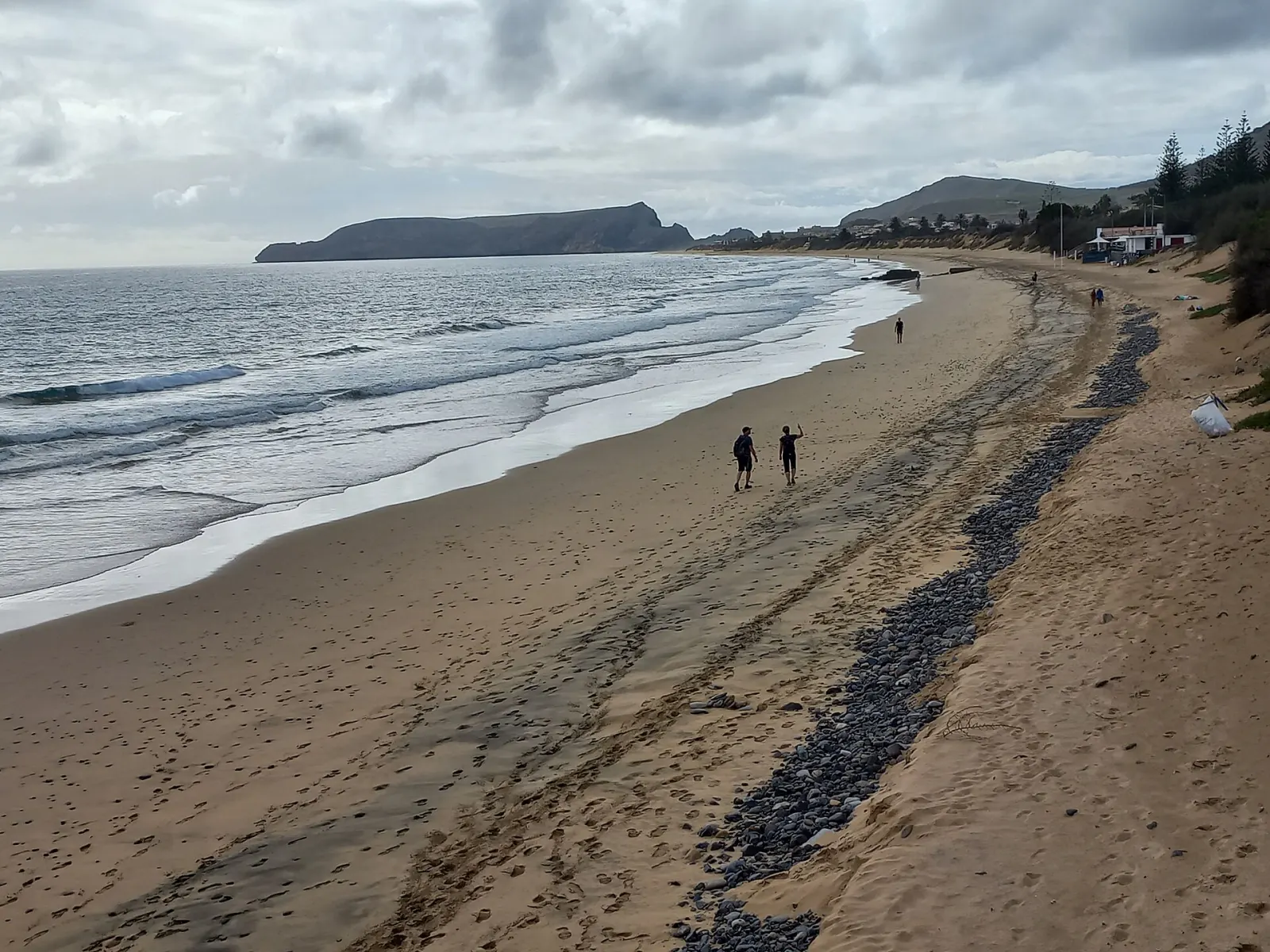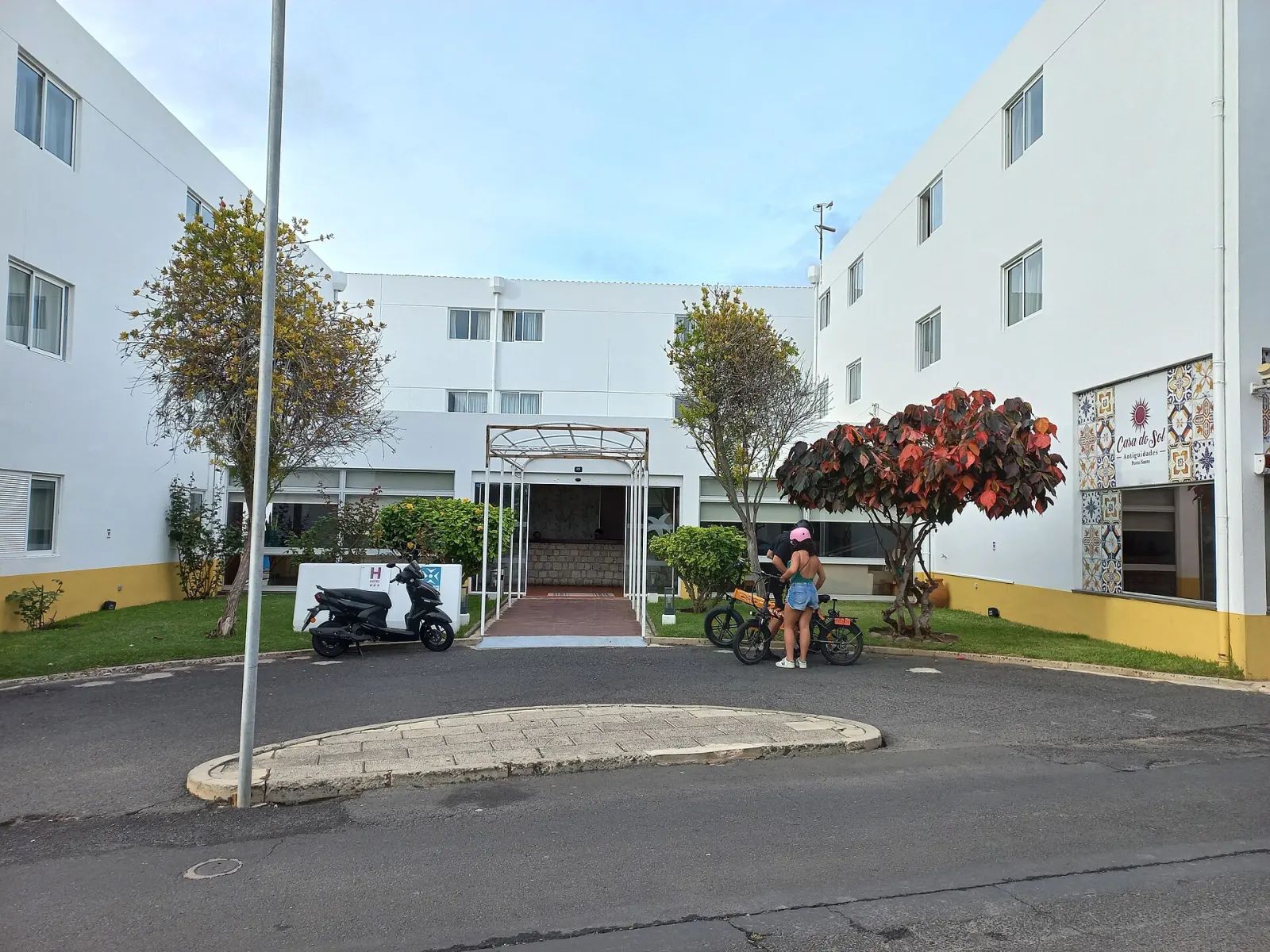
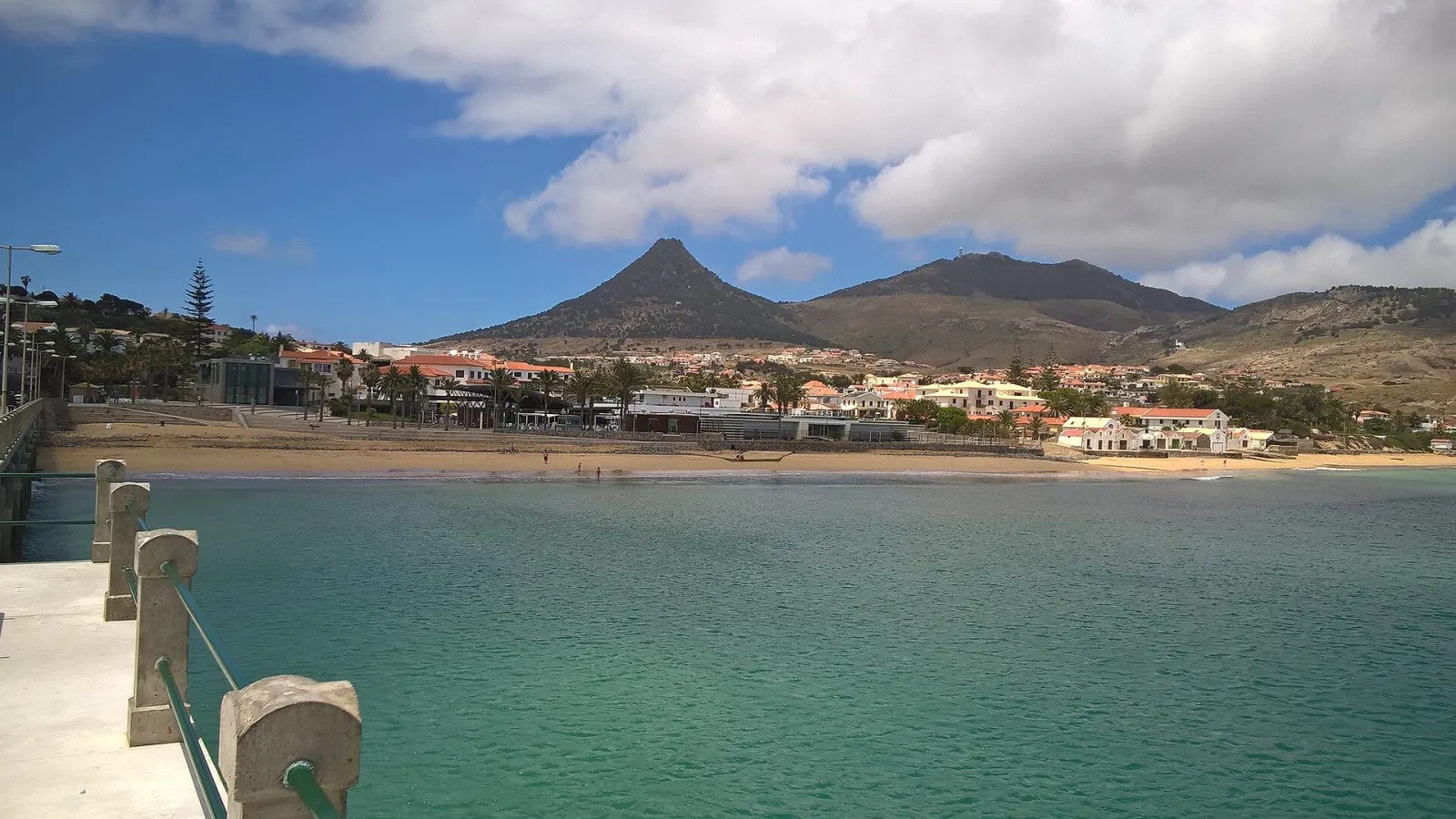
Porto Santo is the second inhabited island of the Madeira archipelago, about 43 km north-east of Madeira, and is known above all for its nine-kilometre sandy beach. It is low, dry and sunny where Madeira is steep and green, and it is reached from Funchal by a ferry of about 2 h 15 min or a flight of about 15 minutes.
What defines Porto Santo?
The island and its islets form a single municipality and a single parish, covering 42.59 km²; the main town is Vila Baleira, which gained city status in 1996. Geologically it is older than Madeira, and Visit Madeira notes that the island, its islets and surrounding sea are a UNESCO Biosphere Reserve.
The landscape divides in two. The north-east is hilly, with peaks such as Pico do Castelo (437 m), Pico da Juliana (447 m), Pico da Gandaia (499 m) and Pico do Facho (517 m), the highest. The south-west is a coastal plain that ends in the long beach of golden sand.
History is close at hand: João Gonçalves Zarco and Tristão Vaz Teixeira reached the island in 1418 after a storm, and the name ("holy harbour") comes from the sheltered bay that saved them. Bartolomeu Perestrelo became its first captain in 1445; his daughter Filipa Moniz Perestrelo married Christopher Columbus, who lived on the island for a time — the house in Vila Baleira is now a museum.
What is there to do on Porto Santo?
- The beach. Porto Santo beach runs for about 9 km along the south coast, with Vila Baleira roughly in the middle. Its fine sand is the main reason people come.
- Walks to the peaks. Porto Santo has its own classified trails. PS PR 1, Vereda do Pico Branco e Terra Chã, is 2.7 km one way (about 1 h 30 min each way) with wide views over the island; PS PR 3, Levada do Pico do Castelo, is a 4.1 km route along a levada built in the first half of the 20th century. Check trail booking and fees and SIMplifica before walking.
- In and on the water. Visit Madeira lists diving, boat trips, kayaking, stand-up paddle, windsurfing and whale watching from the island; the calm south coast and steady wind suit board sports.
- Golf and riding. The 18-hole course, designed by Seve Ballesteros, hosted the Madeira Islands Open in 2009; the golf complex also has an equestrian centre.
- Vila Baleira. The small town centre holds the house-museum linked to Columbus and the town hall, a few minutes from the beach.
What is the weather like on Porto Santo?
Porto Santo has a semi-arid climate, quite unlike Madeira's: its low relief does not trap rain clouds the way Madeira's mountains do. July and August are the driest months, November and December the wettest, and August and September the sunniest. Humidity still averages about 77% year-round. In practice, it can be a reliable choice when Madeira's north or mountains are under cloud — but there is little natural shade on the beach, so plan for sun.
How do you get to Porto Santo from Madeira?
- By ferry. The Lobo Marinho, run by Porto Santo Line, sails between Funchal and Porto Santo; the operator gives the crossing as about 2 h 15 min and the distance as 71 km. The ship is 112 m long and carries up to 1,153 passengers and 145 vehicles. Foot passengers must board at least 30 minutes before departure; cars must be at the car deck an hour before. A same-day return "one day cruise" was listed from €58.90 on the operator's site in October 2026.
- By air. Porto Santo Airport has daily flights to Madeira Airport, about 15 minutes away. It also serves as a diversion airport when strong winds close Madeira Airport.
Timetables change by season and with sea conditions, so check the operator before planning a day trip.
Who is Porto Santo a good base for?
Porto Santo suits beach holidays, families, divers and anyone who wants a few quiet days after hiking on Madeira. It does not suit travellers who want levada walks, laurel forest or a large choice of restaurants. A day trip works if you take the morning ferry out and the evening ferry back; two or more nights give you time for the peaks and the far ends of the beach. For timing your visit, see the best time to visit Madeira.