Best time to visit Madeira: climate, events and trail conditions
Official IPMA climate data for Funchal and Porto Santo, the north–south rainfall contrast, 2027 festival dates and what each season means for hiking.
28 October 2026 · 5 min read
Madeira can be visited all year round. In Funchal, the official IPMA climate normal for 1991–2020 gives an average daily maximum of 19.9 °C in February, the coolest month, and 26.8 °C in August, the warmest, with an annual mean of 20.0 °C. What really changes through the year is rain: almost all of Funchal's 574.3 mm of annual precipitation falls between October and April, so the best month depends on whether you come for hiking, Porto Santo's beach or Funchal's big festivals.
How warm and how wet is Madeira in each month?
The table shows the IPMA normals for the Funchal weather station (58 m above sea level), 1991–2020. "Avg max" and "Avg min" are the average daily maximum and minimum temperatures.
| Month | Avg max (°C) | Avg min (°C) | Rain (mm) | Days ≥ 1 mm |
|---|---|---|---|---|
| Jan | 20.0 | 14.3 | 67.1 | 6.2 |
| Feb | 19.9 | 13.9 | 72.4 | 5.5 |
| Mar | 20.6 | 14.3 | 62.3 | 5.8 |
| Apr | 21.0 | 14.9 | 45.2 | 4.7 |
| May | 22.0 | 16.2 | 27.2 | 3.3 |
| Jun | 23.7 | 18.2 | 7.8 | 1.0 |
| Jul | 25.4 | 19.7 | 1.7 | 0.3 |
| Aug | 26.8 | 20.7 | 1.3 | 0.4 |
| Sep | 26.6 | 20.4 | 23.1 | 3.1 |
| Oct | 25.2 | 19.2 | 91.2 | 7.0 |
| Nov | 22.8 | 17.0 | 80.3 | 7.3 |
| Dec | 21.0 | 15.5 | 94.8 | 8.6 |
| Year | 22.9 | 17.0 | 574.3 | 53.4 |
Three things stand out in the official data:
- Temperatures barely move. Average daily maximums stay between 19.9 °C and 26.8 °C all year. Even in February the average minimum is 13.9 °C, and IPMA records no frost days at this station.
- Summer is warm, rarely hot. Funchal averages 28.0 days with a maximum of 25 °C or more in August, but only 2.5 days a year reach 30 °C.
- Rain is concentrated in the colder half of the year. June, July and August together average 10.8 mm; October, November and December together average 266.3 mm. The wettest single day in the series was 26 November 2010, with 158.6 mm.
Is the weather the same everywhere on the island?
No. The figures above describe a city on the south coast, close to sea level. Madeira's relief strongly affects rainfall, and there are clear differences between north- and south-facing areas in sun exposure, humidity and temperature. In the mountainous interior, areas such as the Madeira Natural Park can receive as much as 2,800 mm of precipitation a year, almost five times Funchal's average.
In practice:
- A sunny morning in Funchal tells you little about the peaks or the north coast. Check the forecast for where you are going, not where you are sleeping.
- The coastal table does not apply at altitude. Pack layers and a waterproof for any day in the mountains, whatever the month.
How does Porto Santo's climate compare?
Porto Santo lies 71 km from Madeira and is noticeably drier. The IPMA normal for its station (78 m altitude) gives 381.7 mm of precipitation a year against 574.3 mm in Funchal, although it falls as lighter rain on more days (61.6 days with at least 1 mm, against 53.4). It is also slightly cooler: annual mean 19.1 °C, with average maximums from 18.2 °C in February to 25.7 °C in August.
For a beach trip to Porto Santo, July to September combine the warmest maximums (24.6–25.7 °C) with the lowest rainfall (4.1–17.0 mm a month).
When is the best time for hiking in Madeira?
The Instituto das Florestas e Conservação da Natureza (IFCN), which manages the official trails, gives the same rules for every season: before starting, follow the official information on trail status and weather; do not walk in heavy rain, strong wind, hail or snow; check the fire risk; tell someone which trail you are doing and when you expect to finish; make sure you can complete it before dark; and carry spare food and water. Fees and booking for the classified trails are covered in trail booking and fees.
How the seasons play out against those rules:
- May to September are the driest months in the official Funchal data, from 27.2 mm in May down to 1.3 mm in August. This is the period least affected by rain, and days are long. The flip side is that dry months are when IFCN's advice to check the fire risk matters most.
- October to February bring the most rain and the most rainy days (8.6 in December). Levada paths and forest trails are more likely to be wet and slippery, and daylight is short, so start early and confirm the trail status on the morning you go.
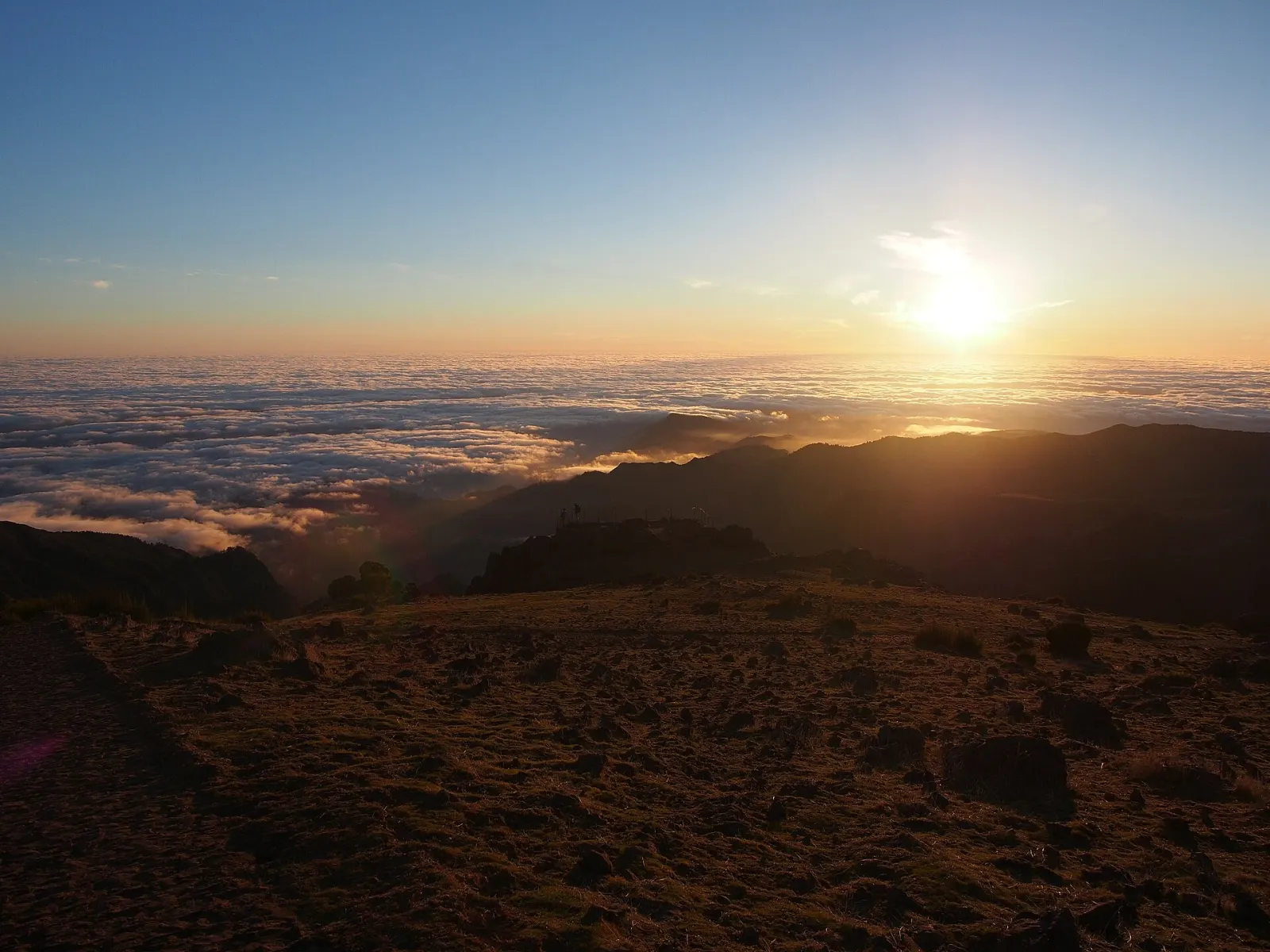
- High routes such as the Vereda do Areeiro are exposed to wind and cloud; forest walks such as the Levada do Caldeirão Verde depend on recent rain. Neither is reliably predicted by the weather in Funchal.
Which festivals and events take place when?
These dates come from the official Tourist Entertainment Calendar published by Madeira's Regional Tourism Directorate on visitmadeira.com. The calendar itself states that it is subject to change.
- Christmas and New Year 2026/27: illumination of the Funchal amphitheatre and Christmas exhibits from 1 December 2026 to 10 January 2027; New Year's Eve fireworks on 31 December.
- Carnival 2027: entertainment in downtown Funchal from 3 to 14 February; Allegoric Carnival Parade on 5 and 6 February; Slapstick Parade on 9 February.
- Flower Festival 2027: 29 April to 30 May; Great Allegoric Flower Parade on 2 and 16 May.
- Atlantic Festival 2027: 4 to 27 June, with the Madeira International Fireworks contest on 5, 12, 19 and 26 June.
- Madeira Wine Festival 2027: 22 August to 12 September, including the live harvest in Estreito de Câmara de Lobos on 11 September.
- Columbus Festival, Porto Santo: 23 to 26 September 2027.
- Madeira Nature Festival: 5 to 10 October 2027.
If a parade is the reason for your trip, plan around these exact days and check the calendar again shortly before you travel.
So which month should you choose?
- Mainly hiking: May, June and September combine low rainfall (3.3, 1.0 and 3.1 rainy days in Funchal) with average maximums of 22.0–26.6 °C, avoiding the warmest weeks of July and August.
- Beach on Porto Santo: July to September.
- Festivals: February for Carnival, late April to May for the Flower Festival, June for the fireworks contest, late August to mid-September for the Wine Festival, and 31 December for the New Year fireworks.
- Winter sun: December to February still average 19.9–21.0 °C maximums in Funchal, but they are among the wettest months, so leave flexible days for hikes.
What do visitors commonly misjudge?
- Using the Funchal forecast for a mountain hike. Rainfall in the interior can be several times higher than on the south coast.
- Assuming summer means no restrictions. Trail status still changes, and IFCN asks hikers to check the fire risk as well as the weather.
- Underestimating short winter days. IFCN asks walkers to finish before dark; in the wet months that leaves less margin for delays.
- Treating event dates as fixed. The official calendar is explicitly provisional.
Sources and fact-checking
Facts checked against the sources below on 28 October 2026. How we work
- IPMA — Normal climatológica Funchal 1991–2020 (station 522)
- IPMA — Normal climatológica Porto Santo 1991–2020 (station 524)
- Visit Madeira — Official Tourist Entertainment Calendar 2026–2029
- IFCN — Precauções e conselhos aos pedestrianistas
- Porto Santo Line — distance Madeira–Porto Santo
- Wikipedia — Madeira (climate)
Photos: Paulo SP/ Wikimedia (CC BY-SA 4.0)