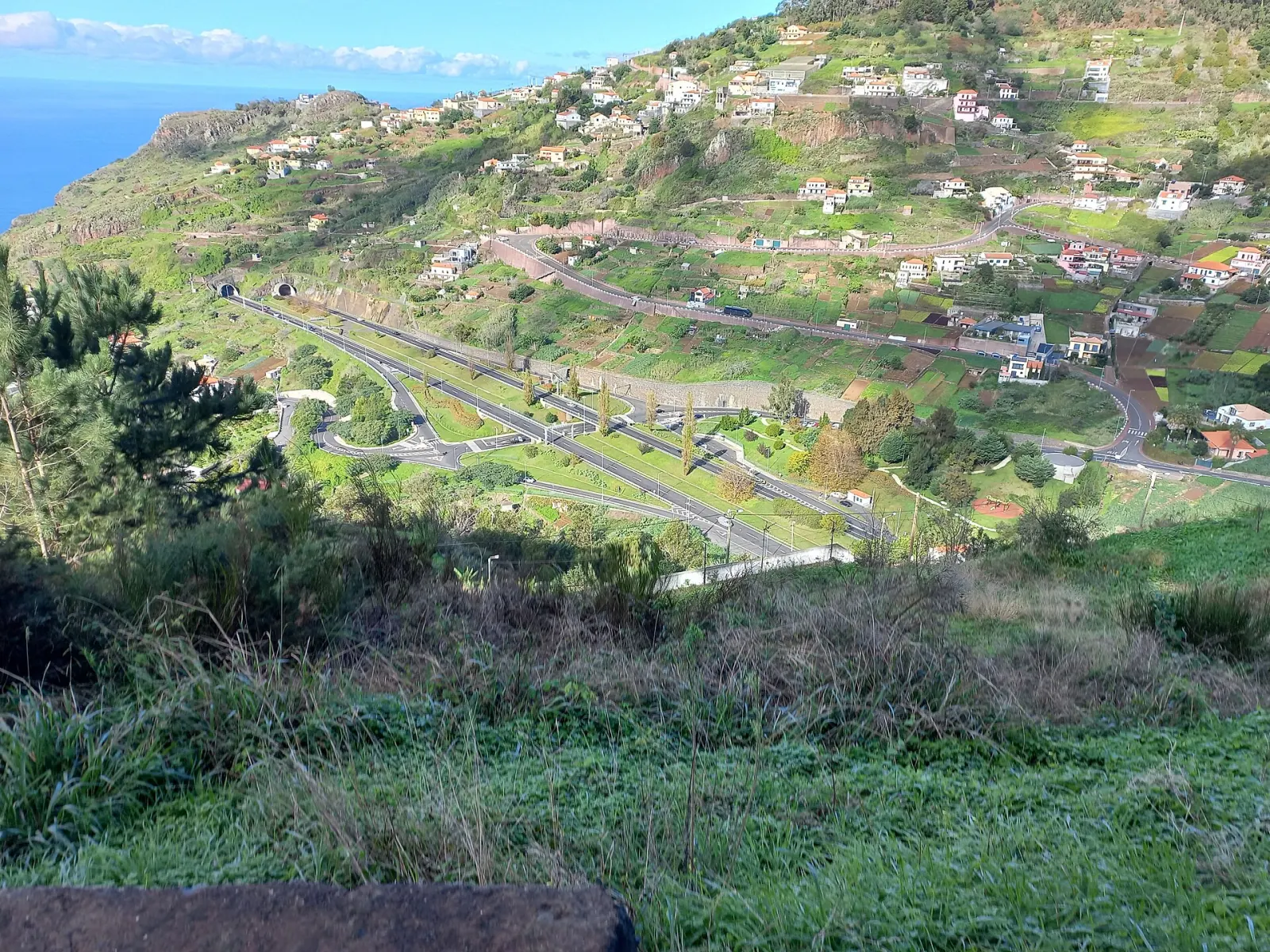
Madeira's endemic wildlife and birds: what you can see and where
Madeira firecrest, trocaz pigeon, Zino's petrel, the Madeiran wall lizard and the Desertas monk seals: where official sources place them, their IUCN status and the rules that protect them.
28 October 2026 · 5 min read
Madeira has a small number of animals found nowhere else, and a few that are among the rarest in Europe. The Madeira firecrest and the trocaz pigeon live only on the main island; Zino's petrel nests only on a few ledges in its central mountains; and the Mediterranean monk seal survives around the Desertas Islands. This guide sets out, from IFCN, IUCN and scientific sources, which species you might realistically see, where official sources say they occur, their conservation status, and the rules that protect them.
Key facts at a glance
| Species | Where | IUCN status | What visitors can expect |
|---|---|---|---|
| Madeira firecrest (Regulus madeirensis) | Main island, mainly 600–1,550 m | Least Concern | Often heard and seen in tree heath and laurel forest |
| Trocaz pigeon (Columba trocaz) | Main island, laurel forest, mostly below 1,000 m | Least Concern | Possible on northern slopes; IFCN calls it less likely to be seen |
| Zino's petrel (Pterodroma madeira) | Central mountain ledges | Endangered (about 80 pairs) | Nocturnal at its colonies; not a species to look for |
| Madeiran wall lizard (Teira dugesii) | Whole archipelago, sea level to ~1,850 m | Least Concern | Seen almost everywhere in sun |
| Mediterranean monk seal (Monachus monachus) | Desertas Islands, occasionally elsewhere | Vulnerable (global) | About 30 animals in the archipelago |
Which birds are endemic to Madeira?
Three bird species are endemic to Madeira: the trocaz pigeon, the Madeira chaffinch and the Madeira firecrest. Two seabirds, Zino's petrel and the Desertas petrel, breed only in the archipelago.
Where can I see the Madeira firecrest?
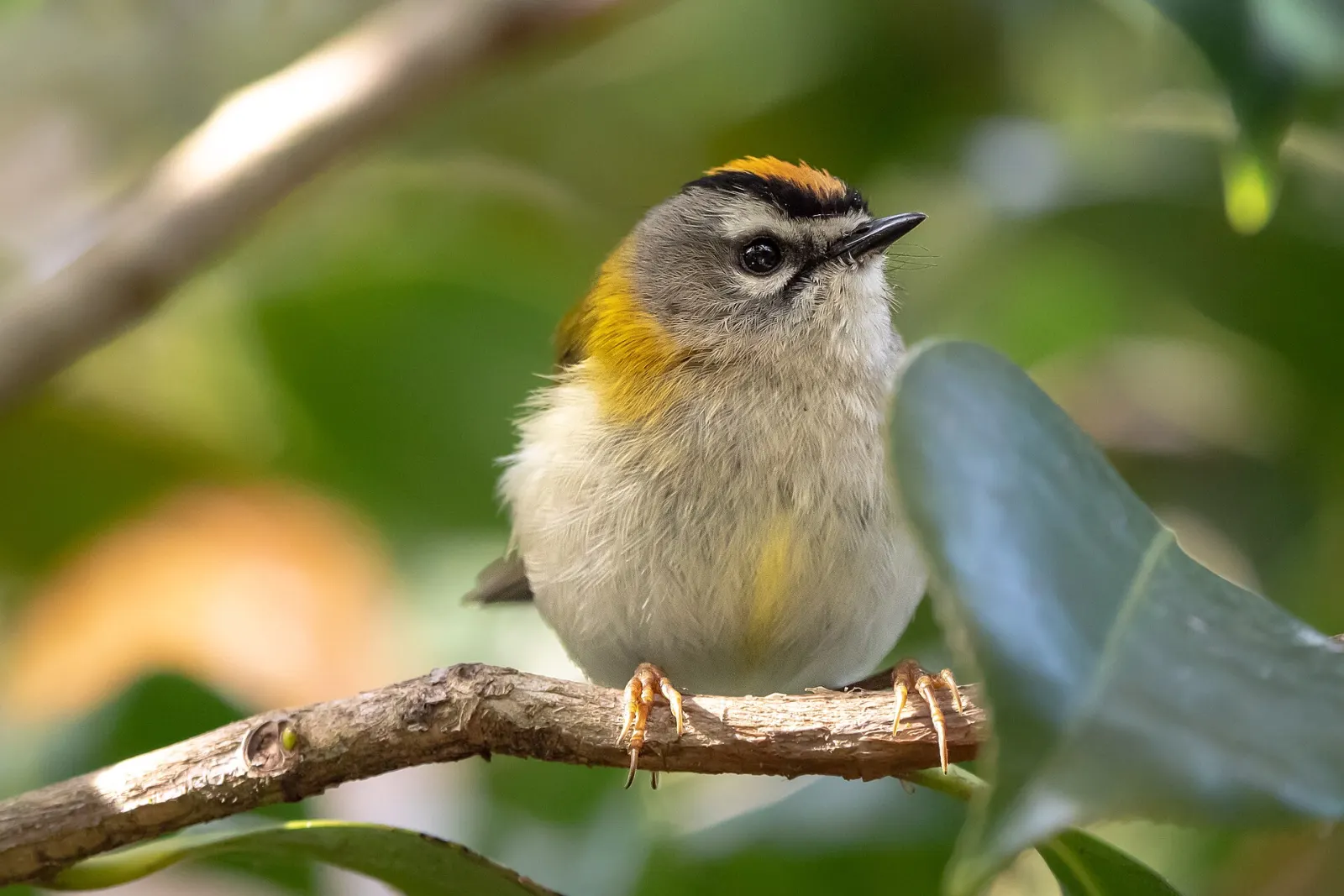
The Madeira firecrest is a tiny bird, about 9–10 cm long and weighing around 5 g; IFCN calls it the smallest bird on the island. It was treated as a subspecies of the common firecrest until 2003, when it was recognised as a separate species. It lives mainly between 600 and 1,550 m, preferring tree heath but also using broom, laurel forest and other woodland; it avoids eucalyptus and acacia plantations. The population is estimated at 100,000–200,000 birds and is classed as Least Concern.
IFCN's official panel for the Vereda dos Balcões at Ribeiro Frio describes the Balcões viewpoint as an excellent spot for endemic birds, naming the firecrest and the Madeira chaffinch, which it describes as intrepid — it often comes close to walkers. The heath around the high peaks is also firecrest habitat.
Can I see the trocaz pigeon?
The trocaz pigeon (pombo-trocaz) is found only on Madeira; it once also bred on Porto Santo but has disappeared from there. It lives in laurel forest and dense tree heath that is often under cloud, mostly below 1,000 m and mainly on the northern slopes. It feeds entirely on plants — mostly fruit, then leaves.
Its numbers fell to about 2,700 birds by 1986, when hunting was banned; current estimates are 7,500–10,000, and the IUCN now lists it as Least Concern. The IFCN panel at Balcões says it is less likely to be seen than the firecrest or chaffinch. IFCN also mentions it along the Levada do Caldeirão Verde. Both trails cross the Laurisilva, Madeira's UNESCO forest.
What is Zino's petrel and why can't you see it?
Zino's petrel (freira-da-madeira) is, in the words of the Regional Government, one of the most threatened seabirds in the world. The EU LIFE programme lists it as Endangered on the IUCN Red List, with about 80 pairs breeding on cliff ledges in Madeira's eastern mountain massif — the high ground between Pico do Arieiro and Pico Ruivo, above 1,650 m according to Wikipedia. The birds come to their colonies only after dark, returning in late March or early April.
The species has been close to the edge. A forest fire in August 2010 killed three adults and 25 of 38 chicks. Introduced rats and feral cats prey on eggs, chicks and adults. The current project, LIFE Pterodromas4future (October 2021 to September 2028), is coordinated by IFCN with the Portuguese bird society SPEA as a partner. It lists threats including fire, invasive predators, light pollution and leisure use of the breeding areas, and its actions include a firebreak around the nesting ledges, artificial nests and cat and rat control.
For visitors, the practical message is simple: on the Vereda do Areeiro and around the peaks, stay on the marked path. Its sister species, the Desertas petrel, is classed as Vulnerable, with about 180 pairs breeding only on Bugio in the Desertas.
What about the Madeiran wall lizard?
The Madeiran wall lizard (Teira dugesii) is the small lizard you will see on walls, rocks and paths almost everywhere. It is endemic to the Madeira archipelago — Madeira, Porto Santo, the Desertas and the Selvagens — and has become established in the Azores after being carried there accidentally by shipping. Adults reach about 8 cm from snout to vent, with a tail roughly 1.7 times as long. It lives from sea level up to about 1,850 m and eats mainly small invertebrates, plus some plant matter such as fruit. It is common and classed as Least Concern; do not feed it.
Where can I see a monk seal in Madeira?
The Mediterranean monk seal (lobo-marinho) is the archipelago's only seal. In May 2026 the regional government, through IFCN, estimated the population at about 30 animals in the archipelago, with its core around the Desertas Islands, which are a nature reserve. Globally, the IUCN reassessed the species in 2023 from Endangered to Vulnerable after small increases in some subpopulations; the regional government still describes it as endangered locally.
Seals are occasionally seen elsewhere, including off Ponta de São Lourenço. Activities in the marine area of the Desertas reserve require prior authorisation from the managing body, so visits are normally made with licensed operators.
What are the rules around wildlife?
IFCN's guidance for anyone who meets a monk seal:
- Keep a safe distance; do not touch or feed the animal.
- On a beach: keep noise down and keep dogs and other pets away.
- In the water: do not enter if the seal is in the area.
- At sea: never chase or deliberately approach it; if it approaches your boat, stay calm and keep your course.
- Report sightings on lobomarinhomadeira.com; the Rede SOS Vida Selvagem also takes reports by WhatsApp on +351 961 957 545.
On classified trails, IFCN's code of conduct asks walkers not to take plants or animals, to avoid noise and to stay on the path. Do not feed birds or lizards. Flights by drone over the laurel forest and other natural areas may be restricted or require IFCN authorisation.
What else should I know?
Marine life is a separate story: see whale and dolphin watching in Madeira and the Garajau marine reserve. Deserta Grande is also home to an endemic wolf spider, Hogna ingens.
Sources and fact-checking
Facts checked against the sources below on 28 October 2026. How we work
- IFCN — PR 11 Vereda dos Balcões official trail panel (endemic birds, code of conduct)
- European Commission LIFE — LIFE Pterodromas4future (IFCN, SPEA): Zino's and Desertas petrels
- Diário de Notícias — Regional Government/IFCN guidance on the monk seal (about 30 animals), 20 May 2026
- Wikipedia — Madeira firecrest (IUCN status, range, altitude)
- Wikipedia — Trocaz pigeon and Zino's petrel (IUCN status, population history)
- Wikipedia — Mediterranean monk seal (IUCN 2023 reassessment, Desertas)
Photos: Rudi B. (CC0)