Driving in Madeira: roads, rules, parking and fuel
VR1 and expressways versus old mountain roads, Portuguese speed and alcohol limits, licence rules, fog on the plateaus, parking at Pico do Arieiro and Rabaçal, and how fuel prices are capped.
28 October 2026 · 5 min read
Driving in Madeira means using two very different road systems: the fast, tunnel-heavy VR1 expressway and the Via Expresso (VE) roads, and the older, narrow regional roads that climb to the trailheads and viewpoints. Portuguese traffic law applies, with a general blood-alcohol limit of 0.5 g/l, and the highest car parks (such as Pico do Arieiro at 1,818 m) are often in fog. This guide brings together what official sources say about the roads, the rules, parking at popular trailheads and fuel, as checked in October 2026.
Key facts at a glance
- VR1: 44.2 km from Ribeira Brava to the port of Caniçal, with 30 tunnels and no tolls.
- Speed limits (cars): 50 km/h in built-up areas, 90 km/h on other roads, 100 km/h on roads reserved for motor vehicles, 120 km/h on motorways — unless signs say otherwise.
- Alcohol: 0.5 g/l in general; 0.2 g/l for drivers in their probationary period and for professional drivers.
- Pico do Arieiro parking: €4.00 per hour (Visit Madeira).
- Rabaçal (Levada das 25 Fontes / Risco): the road down to the forest house is closed to private cars; a municipal shuttle covers the ~2 km for €3 one way or €5 return.
- Fuel: maximum prices are set by the Regional Government and change weekly.
What is the road network like?
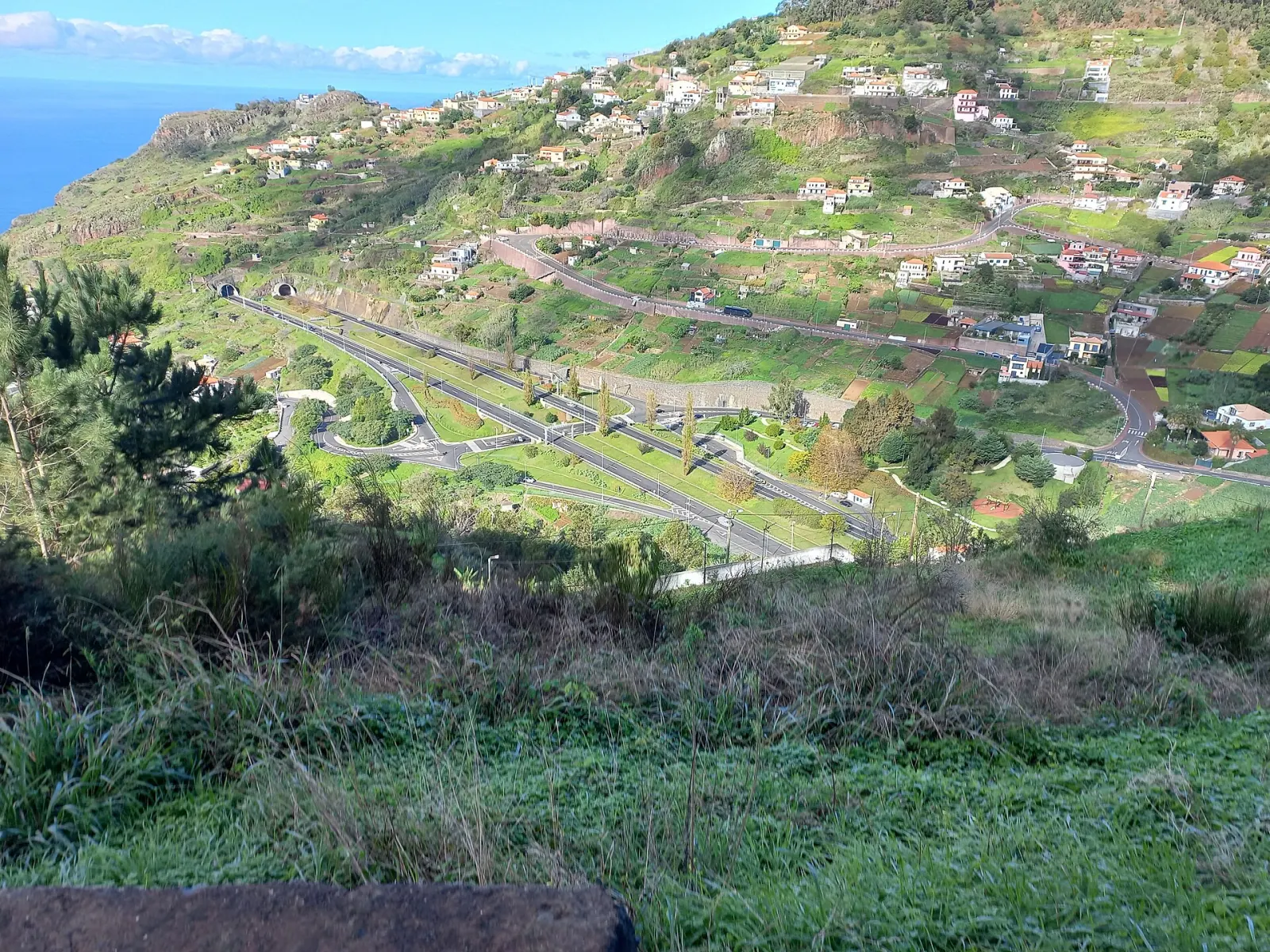
The backbone is the VR1 (Via Rápida). According to Wikipedia, it is 44.198 km long, runs from Ribeira Brava to the port of Caniçal, passes through 30 tunnels and links Funchal with the airport. It opened in stages between 1989 and 2005 and has no tolls.
Beyond the VR1, the Via Expresso roads (marked VE) connect the other coasts. The VE1 runs along the north-east between Machico and São Vicente; its latest section, between São Jorge and Arco de São Jorge, opened in December 2022 with three tunnels totalling 4,398 m. Diário de Notícias noted that it replaced a stretch of the ER 211 that was often restricted or closed because of falling rocks.
The third layer is the old regional roads (ER). These are the roads you use to reach mountain viewpoints, forest houses and trailheads: narrow, full of hairpin bends, often without a hard shoulder, and in places carved into cliffs. The expressways save a lot of time, but almost every hike or viewpoint ends with a stretch of these older roads.
Which Portuguese driving rules matter most for visitors?
Speed. The general limits for light passenger cars under the Código da Estrada are 50 km/h inside built-up areas, 90 km/h outside, 100 km/h on roads reserved for motor vehicles and 120 km/h on motorways. Local signs often set lower limits, especially in tunnels and on the expressways; follow the signs. Fines in the Código da Estrada start at €60–300 for exceeding the limit by up to 20 km/h in a built-up area.
Alcohol. The law treats a driver as under the influence of alcohol from 0.5 g/l. A lower limit of 0.2 g/l applies to drivers in the probationary period and to taxi, emergency and heavy-vehicle drivers, according to the national road safety authority (ANSR).
Phones. The ANSR lists continuous use or handling of a device while driving as an offence and states that using phones with two earpieces is prohibited.
Emergencies. The European emergency number 112 works throughout Madeira; IFCN lists it on its trail panels.
Can I drive in Madeira with my licence?
According to the Portuguese mobility and transport institute (IMT):
- EU and EEA licences are valid in Portugal until the expiry date shown on the licence.
- Licences from countries party to the international road traffic conventions or with a bilateral agreement can be used for 185 days after entering Portugal, as long as you have not taken up residence.
- Licences from countries that are not party to the conventions are not valid for driving in Portugal.
The IMT page does not state whether an International Driving Permit is required. Hire companies set their own conditions, so if your licence was not issued in the EU or EEA, check with your rental company before you travel.
What are mountain roads really like?
Two things catch visitors out: gradient and fog.
The mountain roads climb from the coast to plateaus and peaks at 1,500–1,800 m on steep, winding gradients. Use a low gear on the descent rather than relying on the brakes, give way where the road is too narrow for two vehicles, and expect buses and local drivers who know the bends well.
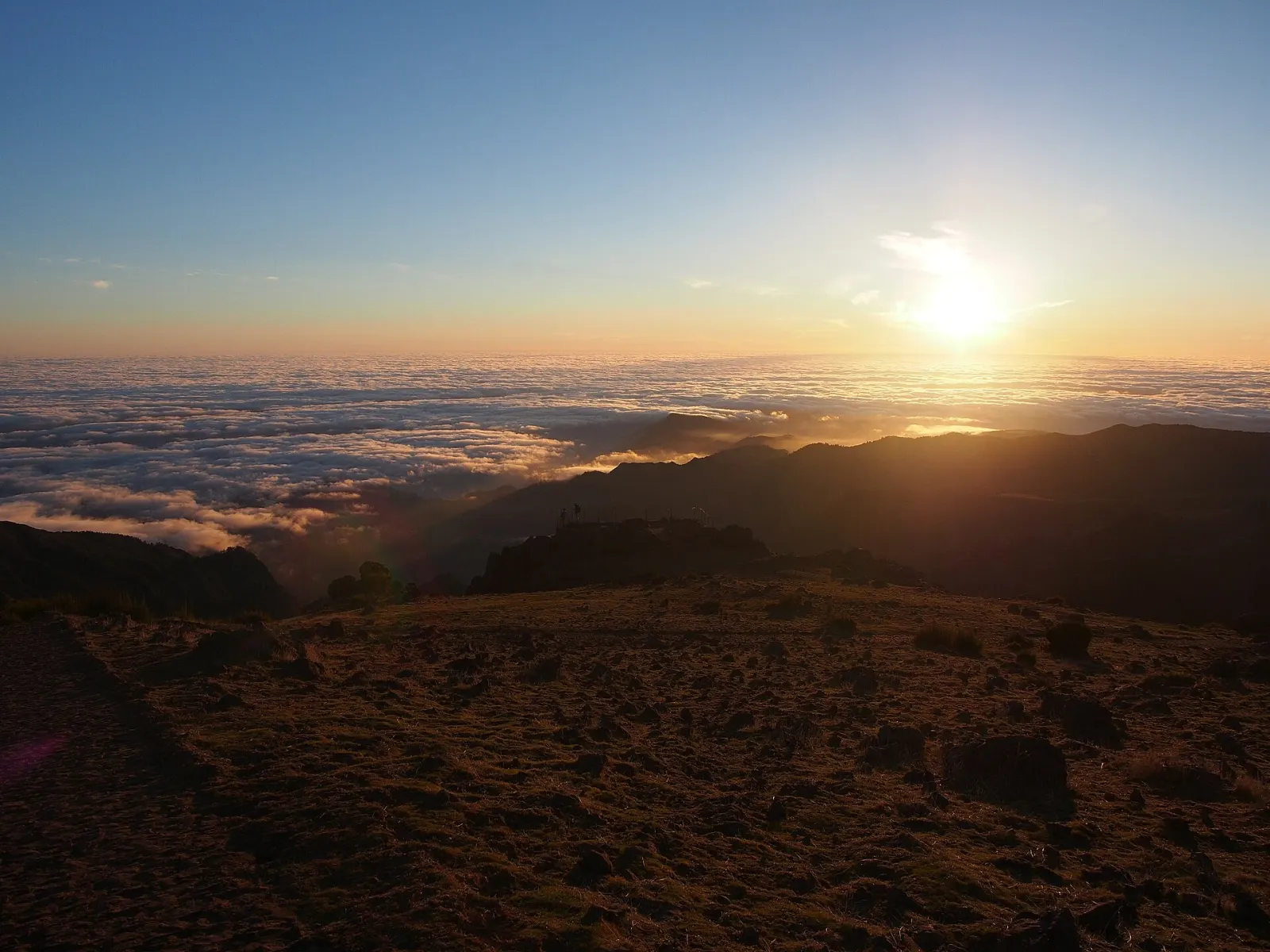
Fog is the norm rather than the exception on the high ground. A study by researchers at the University of Madeira describes the island's northern slope as a barrier to the prevailing north-easterly trade winds, which creates a very frequent fog belt between 800 and 1,600 m altitude. Wikipedia records more than 240 foggy days a year on the Paul da Serra plateau (about 1,500 m), the area you cross to reach Rabaçal and Fanal. Visibility there can drop sharply and quickly: use dipped headlights, slow down and avoid stopping on the carriageway to take photos.
Where do I park at Pico do Arieiro and Rabaçal?
Pico do Arieiro. Visit Madeira lists parking at the summit at €4.00 per hour. Visit Madeira also lists a shuttle service operated by Horários do Funchal; check its timetable on the official page. If you are walking the PR 1 to Pico Ruivo, remember that the route is now one-way, so a car left at Arieiro means arranging a lift back — see the Vereda do Areeiro trail guide and the Pico do Arieiro viewpoint.
Rabaçal. The PR 6 Levada das 25 Fontes and PR 6.1 Levada do Risco start on the regional road ER 105 at Rabaçal. The narrow road from there down to the Rabaçal forest house is closed to traffic. The Calheta municipality runs a shuttle over the roughly 2 km to the forest house for €3 one way or €5 return; Diário de Notícias reported it running daily from 09:00 to 18:00. The walking fee for PR 6 is separate: €4.50 for visitors over 12, paid through the SIMplifica portal. Cars parked along the ER 105 fill up on sunny days, so arrive early. See Levada das 25 Fontes, Levada do Risco and the trail booking and fees guide.
How do fuel prices work in Madeira?
Fuel prices in Madeira are capped. The Regional Government publishes maximum retail prices by ordinance, valid from 00:00 on Monday. For the week starting 19 October 2026, the ceiling was €2.035 per litre for 95 petrol and €2.085 for road diesel; stations can charge less. Filling stations are concentrated along the coast and near the expressways, so fill up before heading into the mountains or the far west.
What if I don't want to drive?
Many visitors manage without a car by combining SIGA buses, the Aerobus, taxis and organised tours. The coast between Funchal and Machico is well served; many mountain trailheads are not. Our guide to getting around Madeira without a car sets out the options, and hiking safety in Madeira covers weather and mountain planning.
Sources and fact-checking
Facts checked against the sources below on 28 October 2026. How we work
- ANSR — Código da Estrada, republished text (art. 27 speed, art. 81 alcohol)
- ANSR — Perguntas frequentes (alcohol bands, mobile phone use)
- IMT — Tenho carta de condução estrangeira (foreign licences, 185 days)
- Visit Madeira — Pico do Areeiro (parking €4.00/hour, shuttle)
- Câmara Municipal da Calheta — PR 6.1 Levada do Risco (access and Rabaçal shuttle fares)
- Wikipedia (PT) — Via Rápida (Madeira)
Photos: Asurnipal (CC BY-SA 4.0)