Madeira photography spots: where to go and when the light works
Pico do Arieiro, Fanal, Cabo Girão, Véu da Noiva, Ponta de São Lourenço and Porto Moniz: sunrise and sunset times, the fog belt that shapes the light, and Portugal's drone rules.
28 October 2026 · 6 min read
Madeira's best-known photo spots — Pico do Arieiro, Fanal, Cabo Girão, the Véu da Noiva waterfall, Ponta de São Lourenço and Porto Moniz — each work best at a different time of day, because of which way they face and where the island's clouds sit. Pico do Arieiro (1,818 m) rises above the fog belt that forms between about 800 and 1,600 m on the northern slopes, while Fanal sits inside it. This guide explains the light and weather logic for each spot, with sunrise and sunset times from an astronomical source, and sets out the drone and protected-area rules in force in October 2026.
Key facts at a glance
- Funchal sun times (2026): sunrise 07:00 / sunset 21:18 at the June solstice; 08:05 / 18:05 at the December solstice. Clocks change on the last Sundays of March and October.
- Cloud belt: frequent fog between 800 and 1,600 m on the windward northern slopes (University of Madeira research).
- Sunrise spots: Pico do Arieiro, Ponta de São Lourenço. Sunset spot: Porto Moniz. Fog spot: Fanal.
- Drones: registration with ANAC is required for any drone with a camera; maximum 120 m above ground in the open category; Madeira and Porto Santo airports are prohibited zones.
When does the sun rise and set in Madeira?
Times below are for Funchal, from the sunrise-sunset.org astronomical data service (checked against the US Naval Observatory). Madeira uses the same time zone as mainland Portugal: UTC+0 in winter and UTC+1 in summer.
| Date (2026) | First light (civil twilight) | Sunrise | Sunset | Day length |
|---|---|---|---|---|
| 20 March | 06:46 | 07:11 | 19:19 | 12 h 07 |
| 21 June | 06:31 | 07:00 | 21:18 | 14 h 18 |
| 22 September | 07:31 | 07:55 | 20:04 | 12 h 08 |
| 28 October | 06:56 | 07:21 | 18:20 | 10 h 59 |
| 21 December | 07:38 | 08:05 | 18:05 | 10 h 00 |
Two consequences matter for planning. First, in summer the sun rises late by the clock and sets very late, so a "golden hour" dinner can mean 20:30 or later. Second, the useful light for a sunrise shot begins about 25–30 minutes before sunrise, at the start of civil twilight — and at a mountain viewpoint you need to be parked and in position by then.
Why does the cloud matter more than the sun?
A study by researchers at the University of Madeira describes the northern slope as a barrier to the prevailing north-easterly trade winds, producing a very frequent fog belt between 800 and 1,600 m. That single fact explains most of Madeira's photographic contrasts:
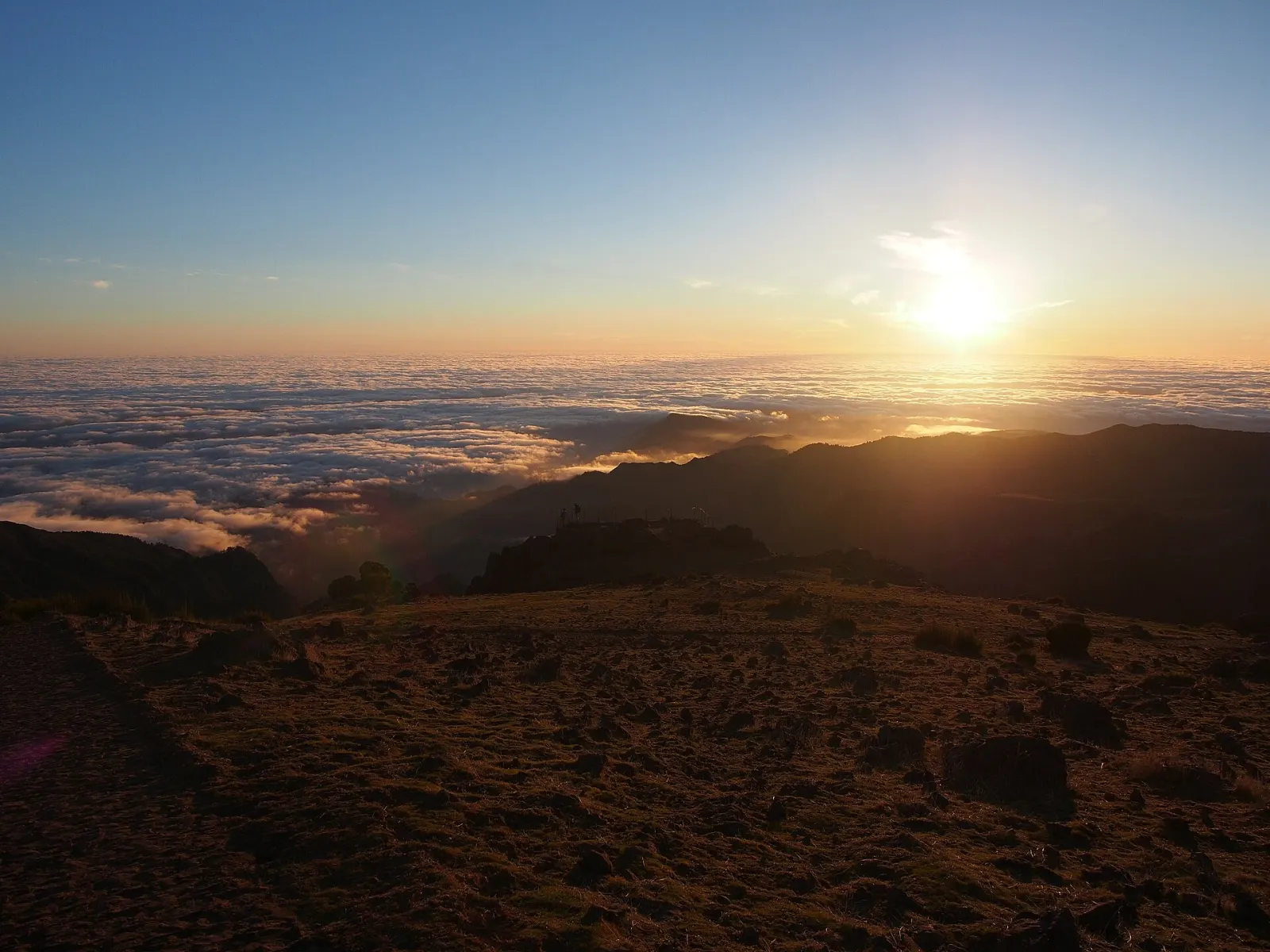
- Above the belt (Pico do Arieiro, 1,818 m; Pico Ruivo, 1,862 m) you can stand in sunshine looking down on a "sea of clouds".
- Inside the belt (Fanal, Paul da Serra) you are often in the fog itself.
- Below it on the south coast (Cabo Girão, Funchal) the sky can be clear while the mountains behind are covered.
Wikipedia records more than 240 foggy days a year on the Paul da Serra plateau. So the question is rarely "will it be sunny?" but "where will the cloud be?" Check a forecast and webcam the evening before and keep a second location in mind.
Pico do Arieiro: sunrise above the clouds
Pico do Arieiro is reachable by road and sits above the usual fog belt, which is why it is the island's classic sunrise spot. Visit Madeira describes the sunrise as the main spectacle here, "weather permitting", with Porto Santo visible on clear days. Practical points:
- Plan to arrive before civil twilight (06:31 at the June solstice, 07:38 at the December solstice in Funchal; the summit is very slightly different).
- Parking costs €4.00 per hour (Visit Madeira).
- It is cold and windy at 1,818 m; bring warm layers even in summer.
- Walking further along the PR 1 needs a booked ticket — see the Vereda do Areeiro.
Fanal: fog and old laurel trees
Fanal is the opposite case. Its centuries-old til trees (Ocotea foetens) stand spread out across pasture inside the fog belt; the PR 13 trail runs between 1,130 and 1,420 m. On a day with low cloud on the north side, the trees fade into the mist — the image most people come for. On a clear day, early morning gives softer light and fewer people.
Fanal is classified by the Madeira Natural Park as a Rest and Quiet Reserve and is part of the Natura 2000 network. Stay off the roots, do not climb the trees and keep noise down. The Vereda do Fanal ends here.
Cabo Girão: when is the light best?
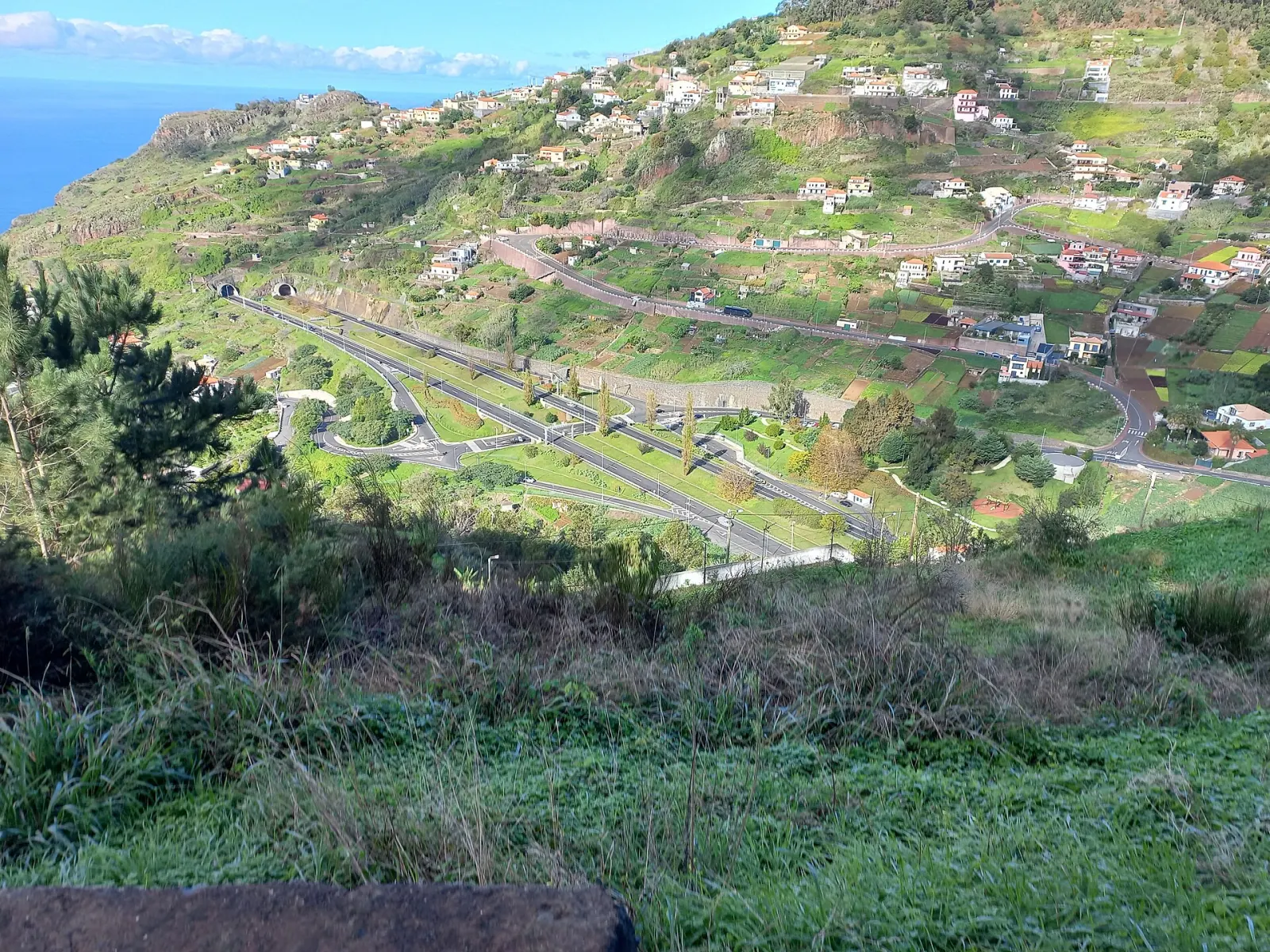
From the platform of Cabo Girão, 580 m above the sea, the main view runs east along the coast towards Câmara de Lobos and Funchal. That orientation decides the timing: in the morning you face into the sun, so the coast is backlit and hazy; from mid-afternoon onwards the sun is behind or beside you and lights the coastline and the farmed fajãs at the foot of the cliff. Because it lies on the south coast, below the cloud belt, it is also a good fallback when the mountains are covered.
Véu da Noiva: why overcast can be better
The Miradouro do Véu da Noiva on the north coast looks at a stream falling straight from a cliff into the Atlantic. On a north-facing coast in the northern hemisphere, the cliff is often in shadow while the sky behind is bright, which makes exposure difficult on sunny days. Overcast skies give more even light. The fall carries more water after rain and in the wetter months.
Ponta de São Lourenço: sunrise at the eastern tip
Ponta de São Lourenço is the easternmost point of Madeira, so the sun rises over the sea in front of you. In summer the sun rises north of east and in winter south of east, so the angle against the cliffs changes through the year. The headland is a nature reserve and an Important Bird Area. Walking the PR 8 requires a booking on the SIMplifica portal in timed slots; check that the slot you choose fits the light you want. There is no shade at all, so midday light is both harsh and hot.
Porto Moniz: sunset over the open Atlantic
Porto Moniz, at the north-western tip of the island, faces open ocean to the west and north. Around the June solstice the sun sets north of west, over the sea, at about 21:18. Swell breaking over the outer rocks of the natural pools gives long-exposure possibilities, but do not climb onto the outer rocks: they are wet, sharp and exposed to sudden waves.
Can I fly a drone in Madeira?
Only within the rules. According to the Portuguese civil aviation authority (ANAC):
- Registration: you must register as an operator if your drone weighs more than 250 g or carries a camera, video or microphone sensor (the exception is toys complying with Directive 2009/48/EC).
- Open category: fly within visual line of sight, at most 120 m above the ground, and never in airport prohibited or restricted zones. ANAC lists Cristiano Ronaldo Madeira Airport among its prohibited zones; Porto Santo airport is also restricted.
- Aerial imagery: the national aeronautical authority (AAN) says capturing and publishing aerial images requires its authorisation.
- Protected areas: flights over the laurel forest and other natural areas may be restricted or need authorisation from IFCN, the regional nature conservation institute.
How do I photograph without harming protected areas?
IFCN's trail code of conduct asks walkers to stay on the marked path, not to take plants or animals, to avoid noise, not to light fires and to finish before nightfall. For photographers that also means not trampling vegetation for a better angle and not stepping beyond barriers at cliff viewpoints. For more on the forest itself, see Laurisilva, Madeira's UNESCO forest.
Sources and fact-checking
Facts checked against the sources below on 28 October 2026. How we work
- sunrise-sunset.org API — Funchal sun and twilight times 2026 (cross-checked with US Naval Observatory)
- Prada, Cruz, Silva & Figueira (2010) — Contribution of cloud water to groundwater recharge in Madeira Island (fog belt 800–1600 m)
- Visit Madeira — Pico do Areeiro (sunrise, parking €4.00/hour)
- Visit Madeira — Fanal (Rest and Quiet Reserve, Natura 2000)
- ANAC — Drones: operator registration FAQ and open category rules
- Diário de Notícias — Fact check: drone restrictions in Madeira (ANAC zones, AAN authorisation), 30 Aug 2026
Photos: Marco Klapper (CC BY 2.0)