Madeira's Laurisilva: the UNESCO laurel forest and where to walk it
Why UNESCO inscribed 15,000 ha of laurel forest in 1999, the trees and endemic birds you can see, which trails cross it, what threatens it and the rules for visitors.
28 October 2026 · 5 min read
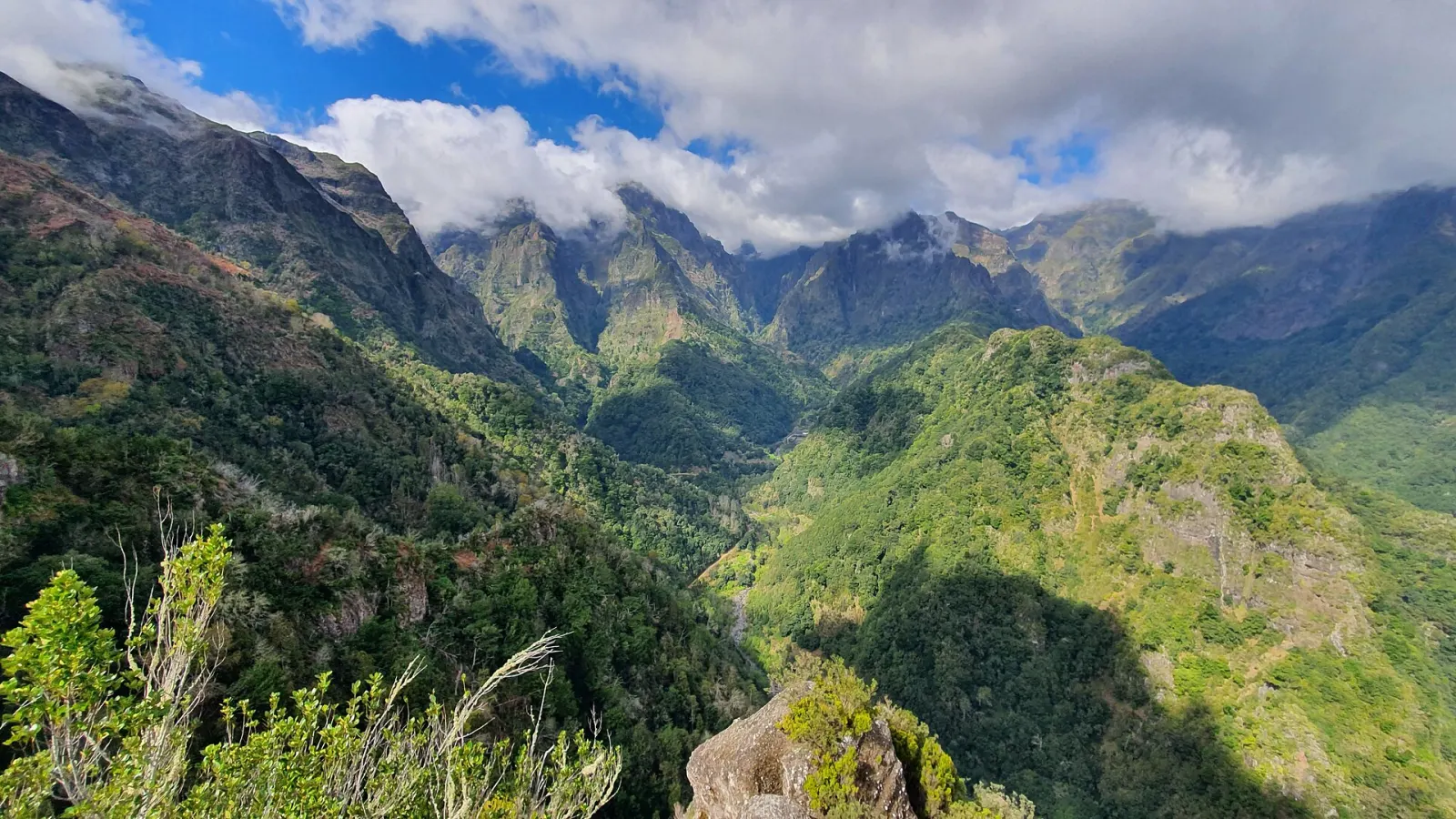
The Laurisilva of Madeira is the island's native laurel forest: about 15,000 ha of evergreen woodland, roughly 20% of Madeira, growing mainly on the north side between 300 and 1,300 m. UNESCO inscribed it as a natural World Heritage Site in 1999 because it is the largest surviving remnant of a forest type that once covered much of southern Europe. You can walk into it on several booked trails, from a 1.5 km path at Ribeiro Frio to the long levada walk to Caldeirão Verde.
Key facts
- World Heritage: inscribed in 1999 at the 23rd session of the World Heritage Committee (site 934), under natural criteria (ix) and (x).
- Area: about 15,000 ha. IUCN's 1999 evaluation for UNESCO described the site as roughly 15,000 ha within a 27,000 ha protected area.
- Share of the island: about 20%, according to IFCN, the regional forestry and nature conservation institute.
- Altitude: 300–1,300 m on the north coast; 700–1,200 m in a few hard-to-reach places on the south side.
- Other protection: Council of Europe Biogenetic Reserve since 1992, Natura 2000 site, and entirely inside the Madeira Natural Park.
Why is Madeira's laurel forest a World Heritage Site?
The two criteria match two different arguments. Criterion (ix) recognises the forest as a relict. IUCN's technical evaluation, published on the UNESCO website, explains that fossil evidence shows laurel forest covering much of southern Europe 15–40 million years ago, and that Madeira's is the largest area surviving. The same evaluation estimated that around 90% of it was primary forest.
Criterion (x) is about biodiversity. In 1999 IUCN counted at least 66 vascular plant species endemic to Madeira within the site, 13 liverworts and 20 mosses listed as rare or threatened at European level, and endemic animals including a pigeon, a lizard, two bats, and endemic subspecies of chaffinch and firecrest. IFCN states that more than 80% of the region's endemic species are found in this forest. In its 2025 assessment, IUCN's World Heritage Outlook rates the site "good with some concerns".
What is the Madeira Natural Park, and how does it relate?
The Madeira Natural Park was created in 1982 by Regional Legislative Decree 14/82/M and covers about two-thirds of the island, according to IUCN's World Heritage Outlook. The whole Laurisilva lies inside it. IFCN manages most of the World Heritage property, and land use in the forest is governed by a dedicated management plan, the Plano de Ordenamento e Gestão da Laurissilva da Madeira.
In practice this means the forest is a working protected area, not a park with gates. Trails are classified, many are fee-paying and booked by time slot, and some areas carry extra designations. Fanal, for example, is a Rest and Silence Reserve within the Natural Park.
Which trees and birds will you actually see?
IFCN lists the dominant trees as endemic members of the laurel family:
- barbusano (Apollonias barbujana)
- loureiro (Laurus novocanariensis)
- til (Ocotea foetens), which IUCN noted can reach 40 m in the lower valleys
- vinhático (Persea indica)
Alongside them grow other endemic trees from different families, such as the folhado (Clethra arborea), pau-branco (Picconia excelsa) and mocano (Visnea mocanera). Along streams look for seixeiros and elders (sabugueiros), and on banks and clearings for endemic shrubs such as the massaroco and the Isoplexis foxglove. Ferns fill the shady valleys. Mosses and lichens cover banks, trunks and rocks; IFCN points out that the lichens indicate clean air and water.
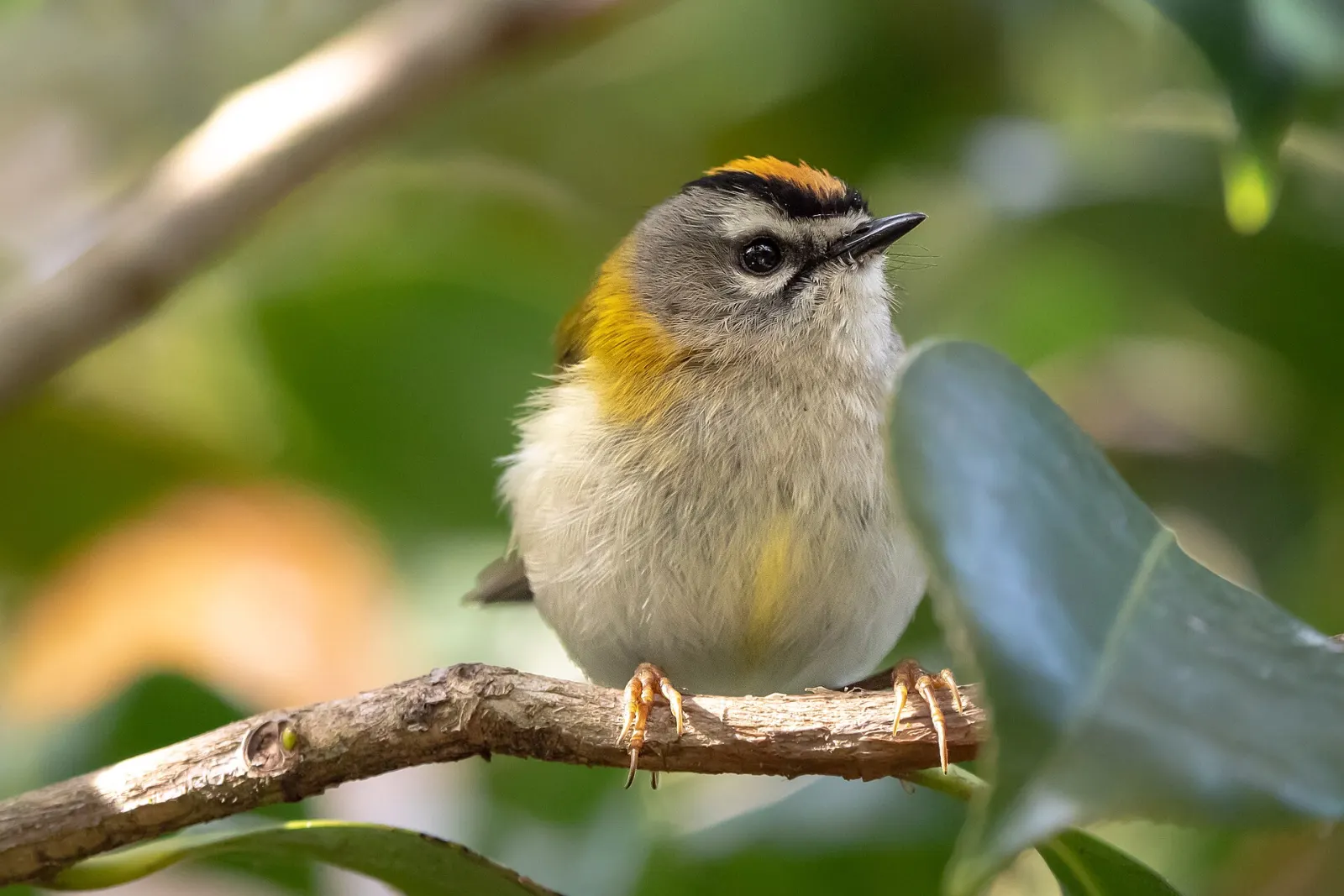
Bird life is limited in species but high in endemism. IFCN says about seven species are seen regularly in the forest interior. The two endemic species of this habitat are the Madeira laurel pigeon or pombo-trocaz (Columba trocaz) and the Madeira firecrest or bis-bis, the island's smallest bird. The pigeon feeds partly on til fruit and is described as the forest's sower. The endemic Madeira chaffinch (tentilhão) is often the easiest to spot, because it comes close to walkers. Blackbirds, robins, wagtails, buzzards and kestrels are also frequent. The Madeiran wall lizard, the island's only native reptile, comes out in sunny spots.
Where can you walk into the Laurisilva?
Visit Madeira lists Queimadas, Chão dos Louros, Chão da Ribeira, Fanal and Ribeiro Frio as places to see the forest. Several catalogue trails cross it, and each shows a different face:
- The quick view: Vereda dos Balcões (PR 11) at Ribeiro Frio is 1.5 km each way and almost flat. It ends at a viewpoint over the forested Ribeira da Metade valley. IFCN recommends it for endemic birds.
- Deep in the forest: Levada do Caldeirão Verde (PR 9) starts at Queimadas and runs 8.7 km each way under the canopy, with four tunnels before the waterfall. Bring a torch.
- Old til trees in open pasture: the Fanal forest, reached by road or at the end of the PR 13 Vereda do Fanal. Fog often rolls in from the north here.
The forest and the levadas are closely linked. IUCN describes the Laurisilva as collecting and retaining water, and many levadas start at springs inside it. Our history of Madeira's levadas explains where that water goes.
When is the best time to go?
The forest is green all year, but the north side is often in cloud, and paths stay wet and slippery. Morning starts give you more daylight on long routes such as PR 9. For views from Balcões, choose a clear forecast. For the misty look at Fanal, a day with low cloud on the north side works best. In strong wind or heavy rain, IFCN may restrict or close trails, so check the status on the day.
What threatens the forest?
IUCN's World Heritage Outlook rates forest fires and invasive species as high threats. It records 599 ha of the forest lost to fire in 2023 and 149 ha in 2024. Invasive plants are the main concern, along with animals such as feral cats, ferrets and rabbits. Climate change makes both problems worse. The Outlook also notes that the 2009 management plan has only been partly carried out, mainly because of budget limits, and that a review began in 2024.
What rules apply when you visit?
IFCN's code of conduct for natural areas sets out clear rules. In the Laurisilva the most relevant are:
- Book and check: classified PR trails need a booked slot and fee on SIMplifica; see our trail booking and fees guide. Check whether the trail is open, restricted or closed.
- Stay on the marked path. No shortcuts. If a landslide blocks the way, turn back instead of going round it.
- Take nothing. Don't pick flowers or plants, and don't take stones or other "souvenirs".
- Leave nothing. Carry all your rubbish home, and don't wash anything in springs or streams.
- No fire. Don't light fires, and don't smoke in the forest, especially in hot, dry weather.
- Respect wildlife. Watch animals from a distance and never feed them.
- Keep it quiet. Leave speakers at home, and keep any dog under control, as many areas don't allow pets.
- Emergency number: 112. Don't walk alone, and finish before dark.
Sources and fact-checking
Facts checked against the sources below on 28 October 2026. How we work
- IFCN — Laurissilva da Madeira, Património Mundial Natural (area, altitude, species, protection)
- UNESCO World Heritage Centre — IUCN technical evaluation of the Laurisilva of Madeira (1999)
- IUCN World Heritage Outlook — Laurisilva of Madeira (2025 assessment)
- IFCN — Normas de conduta em áreas naturais (code of conduct)
- Visit Madeira — Floresta Laurissilva (official tourism board)
- Wikipedia — Madeira evergreen forests (World Heritage listing details, scientific names)
Photos: Ricardo Martins (CC BY-SA 4.0)