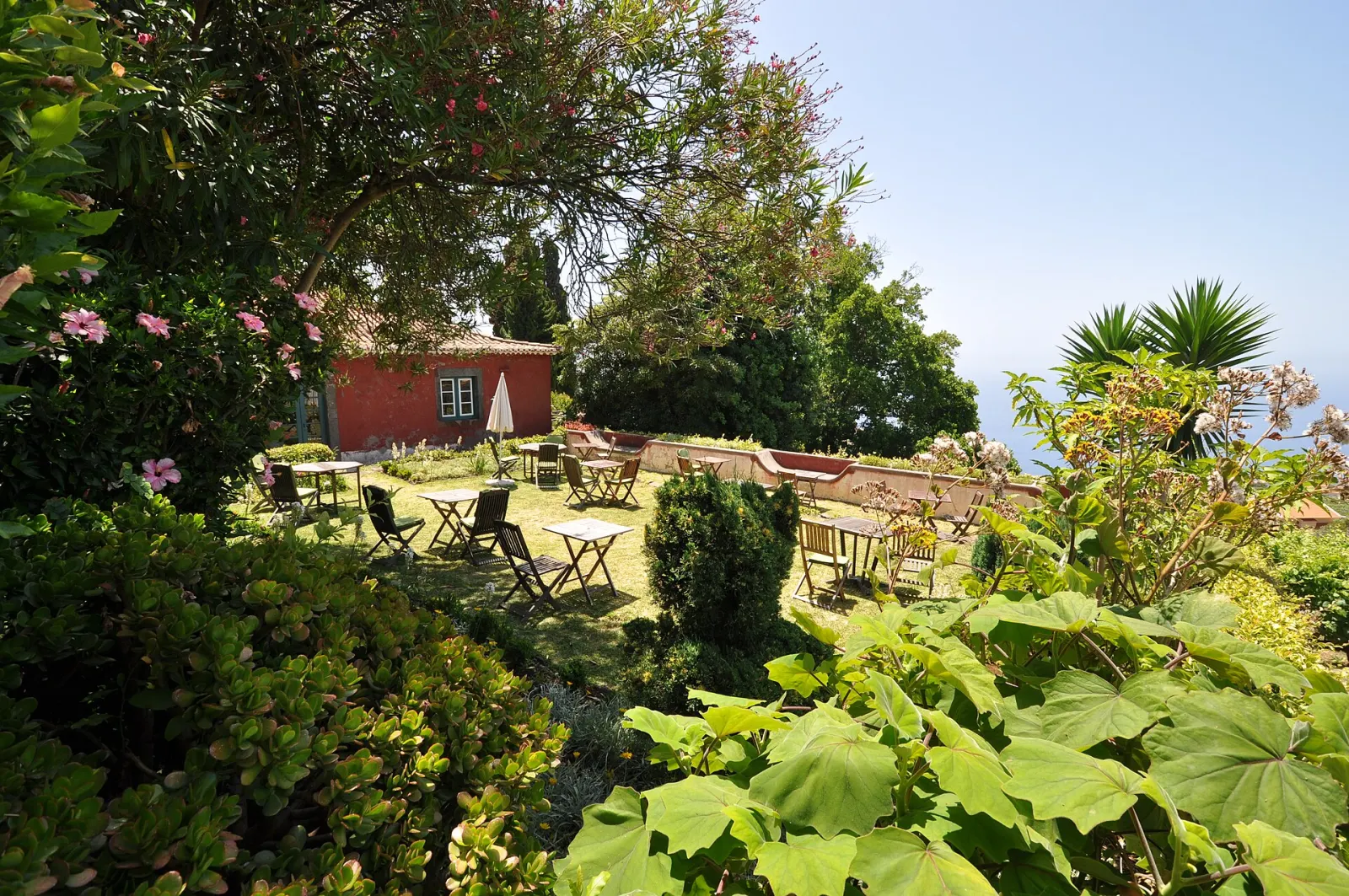
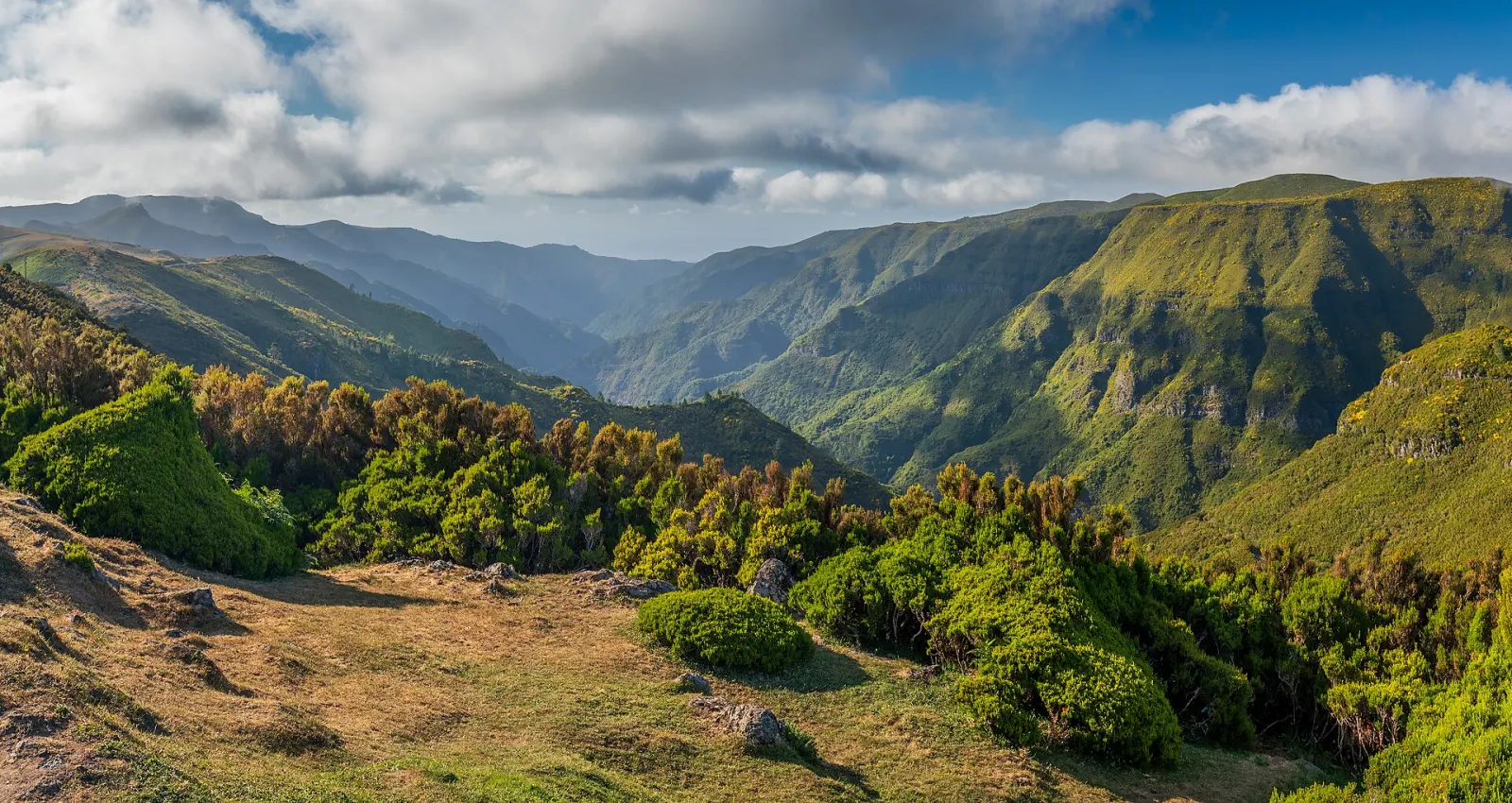
Madeira's west combines the island's sunniest coast — the municipalities of Ribeira Brava, Ponta do Sol and Calheta — with the high, often fog-bound Paul da Serra plateau above it. It is where the most-walked levadas start, at Rabaçal, and where the Fanal laurel woodland sits, so a single day here can go from warm coastal villages to cloud at around 1,500 m.
What defines the west of Madeira?
- The south-west coast. Visit Madeira describes Ribeira Brava, Ponta do Sol and Calheta as the sunniest part of the island, and Ponta do Sol as its warmest and sunniest municipality. The terraces here grow sweet potatoes, sugar cane and bananas.
- Calheta. Founded in 1430 and made a town by royal charter on 1 July 1502, Calheta covers 111.50 km² and eight parishes: Arco da Calheta, Calheta, Estreito da Calheta, Fajã da Ovelha, Jardim do Mar, Paul do Mar, Ponta do Pargo and Prazeres. Paul do Mar and Calheta have a long fishing tradition, and some spots on this coast are popular with surfers. The lighthouse at Ponta do Pargo, at the island's western tip, was inaugurated on 5 June 1922.
- Paul da Serra. The largest plateau on Madeira, about 24 km² at an average altitude of around 1,500 m, rising to 1,640 m. It is the island's most important area for groundwater recharge, and its flat ground hosts the wind farms that produce almost all of Madeira's wind power. Rabaçal, at its western edge, looks down into the Ribeira da Janela valley.
What is there to do in the west?
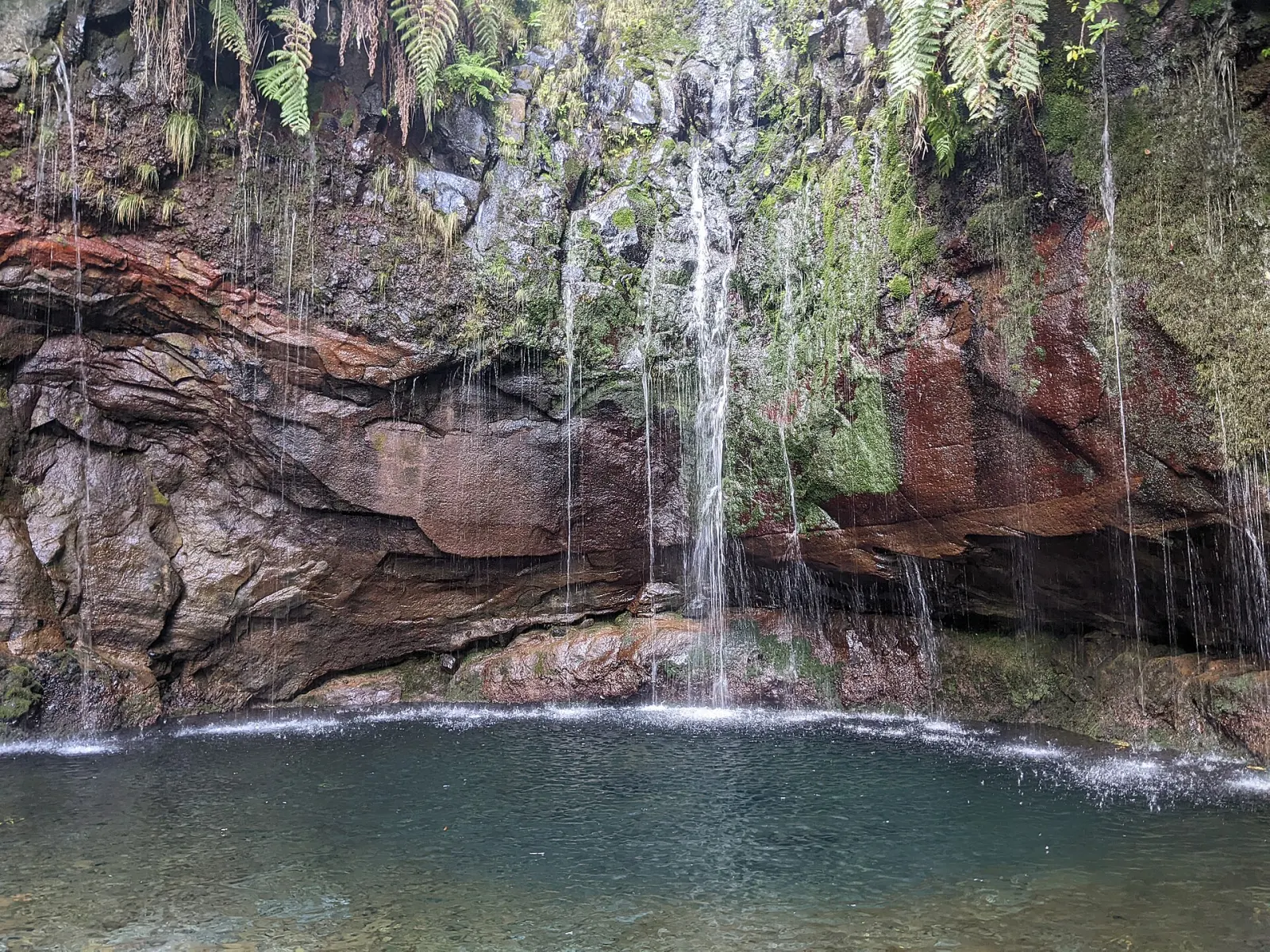
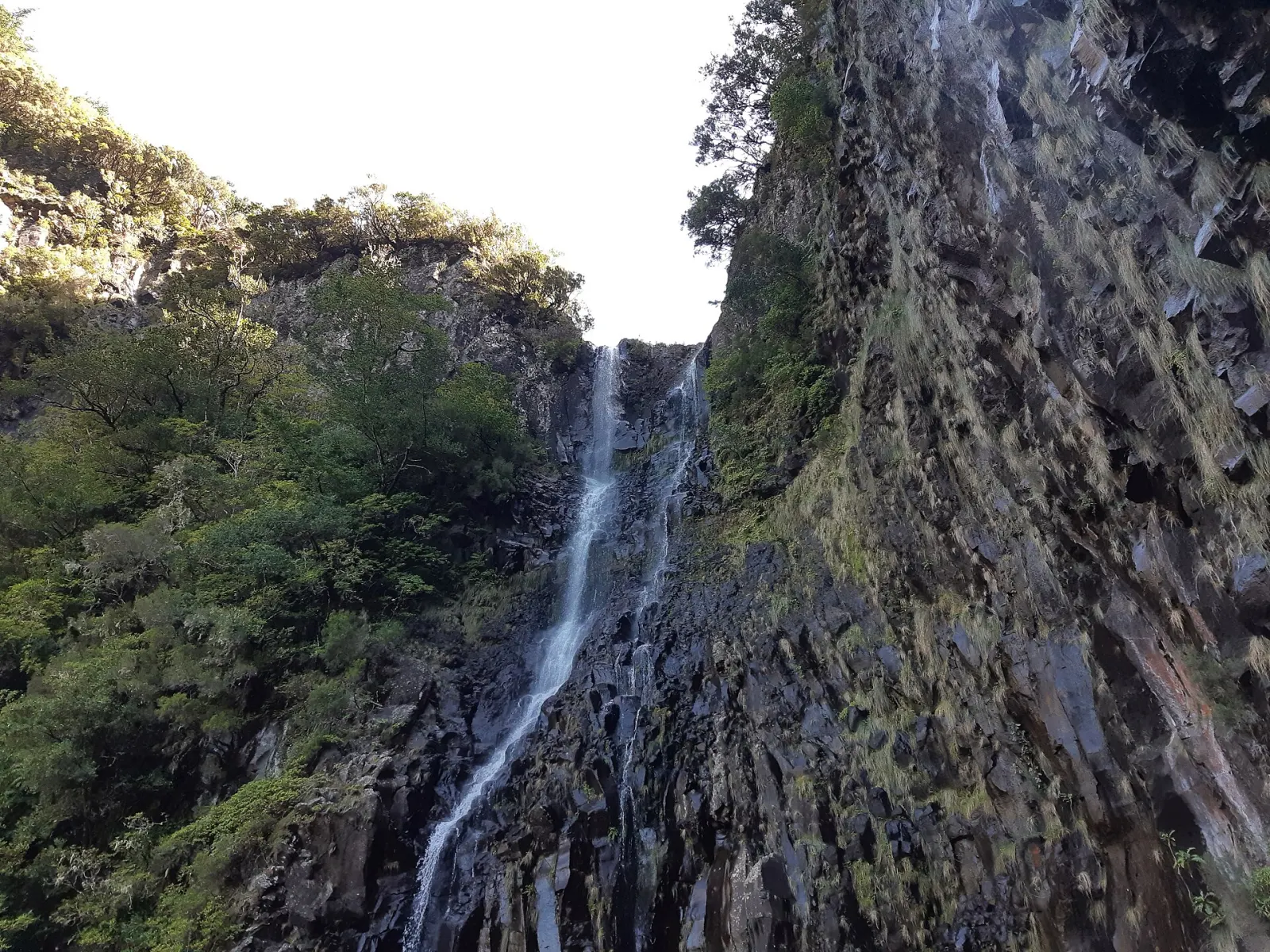
- Rabaçal levadas. Two of Madeira's best-known walks start from Rabaçal: Levada das 25 Fontes (PR 6) and the shorter Levada do Risco (PR 6.1), which leads to the Risco waterfall. Both are classified PR trails and need a paid time-slot booking on SIMplifica — see trail booking and fees.
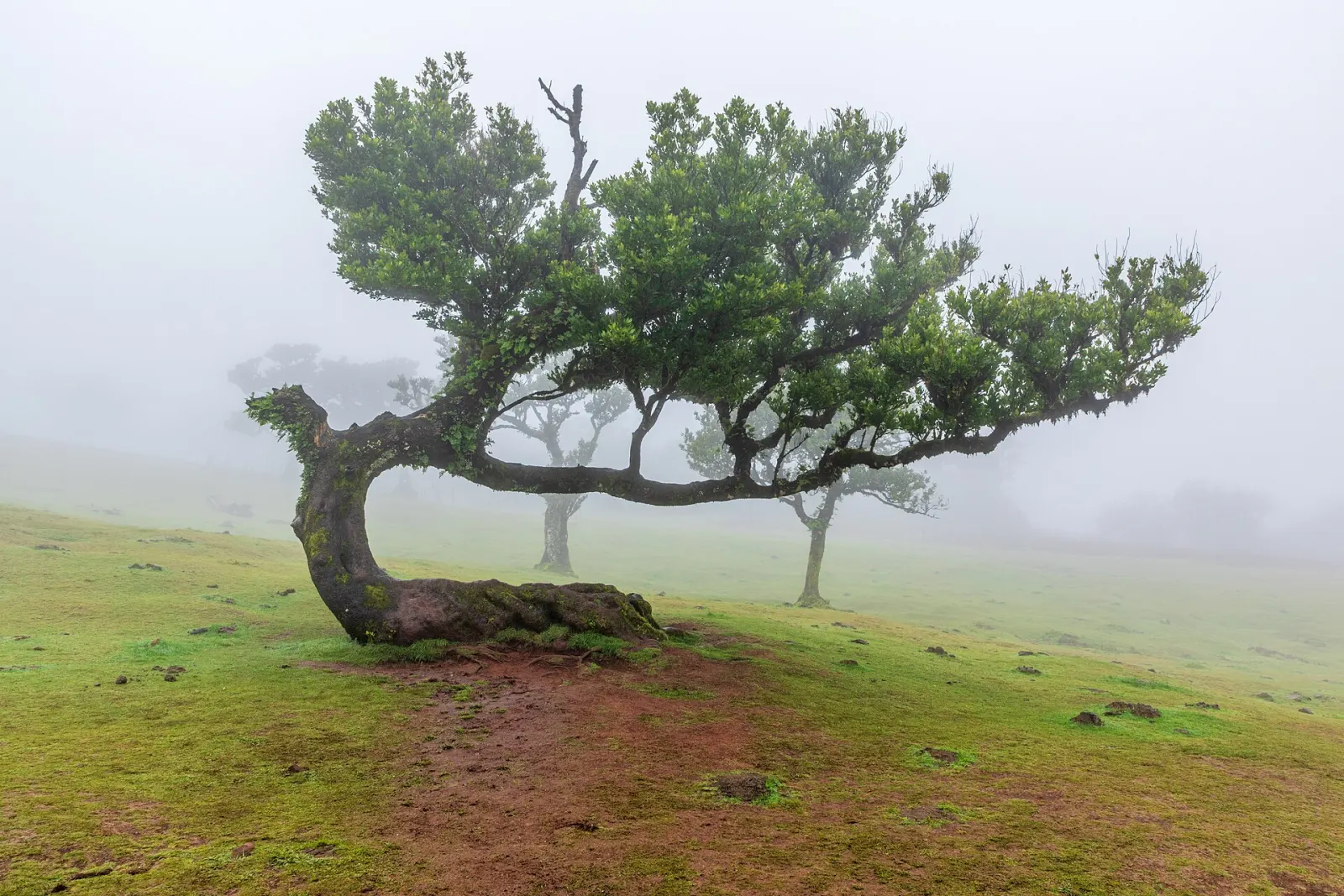
- Fanal. The Fanal forest, a misty laurel-forest area, lies north of Paul da Serra in the municipality of Porto Moniz; Vereda do Fanal (PR 13) crosses the area.
- The coast. Calheta, Jardim do Mar and Paul do Mar give access to the sea on the island's sunniest stretch; the plateau and coast make a natural pairing — walk in the morning, swim in the afternoon.
- Continue north. From Paul da Serra, roads drop to Porto Moniz and Seixal on the north coast.
What is the weather like in the west?
The coast and the plateau have opposite reputations. The south-west coast is considered the sunniest part of Madeira, while Paul da Serra, despite a Mediterranean-type climate, has more than 240 foggy days a year and high humidity that condenses as rain at altitude. Calheta also occasionally receives Saharan dust, which can haze the sky. What this means on the ground:
- A sunny morning in Calheta says little about visibility at Rabaçal; take a warm layer and a rain jacket even in summer.
- Fog on the plateau roads can be thick; drive slowly and allow extra time.
- Fanal is often photographed in mist — that is normal there, not bad luck.
How far is the west from Funchal?
Approximate road distances from central Funchal (OpenStreetMap routing): Calheta about 34 km, Rabaçal about 42 km and Fanal about 49 km. Rabaçal and Fanal are reached via the plateau road, so there is a long climb at the end of the drive.
Who is the west a good base for?
The south-west coast suits travellers who want the most sunshine, a quieter seaside base and quick access to the Rabaçal trails without the drive from Funchal. It suits less well those who want city restaurants or who rely on buses to reach trailheads on the plateau. For a route that combines the west with the peaks, see 5 days: coast to peaks.