What to eat in Madeira: traditional dishes and drinks
Espetada, bolo do caco, espada, lapas, milho frito, poncha, Madeira wine and bolo de mel: what each one is, where it comes from, and the limpet closed season.
28 October 2026 · 6 min read
Madeira's traditional food comes from an island that grew sugar cane, wheat and vines on steep terraces and fished deep Atlantic water. The dishes most visitors look for are espetada (beef on bay-laurel skewers), bolo do caco flatbread, black scabbardfish (espada), limpets (lapas) and milho frito. The drinks are poncha, made with local sugar-cane rum, and fortified Madeira wine. This guide explains what each one is and where it comes from, and what to check before you order. It recommends no restaurants.
What is espetada and where does it come from?
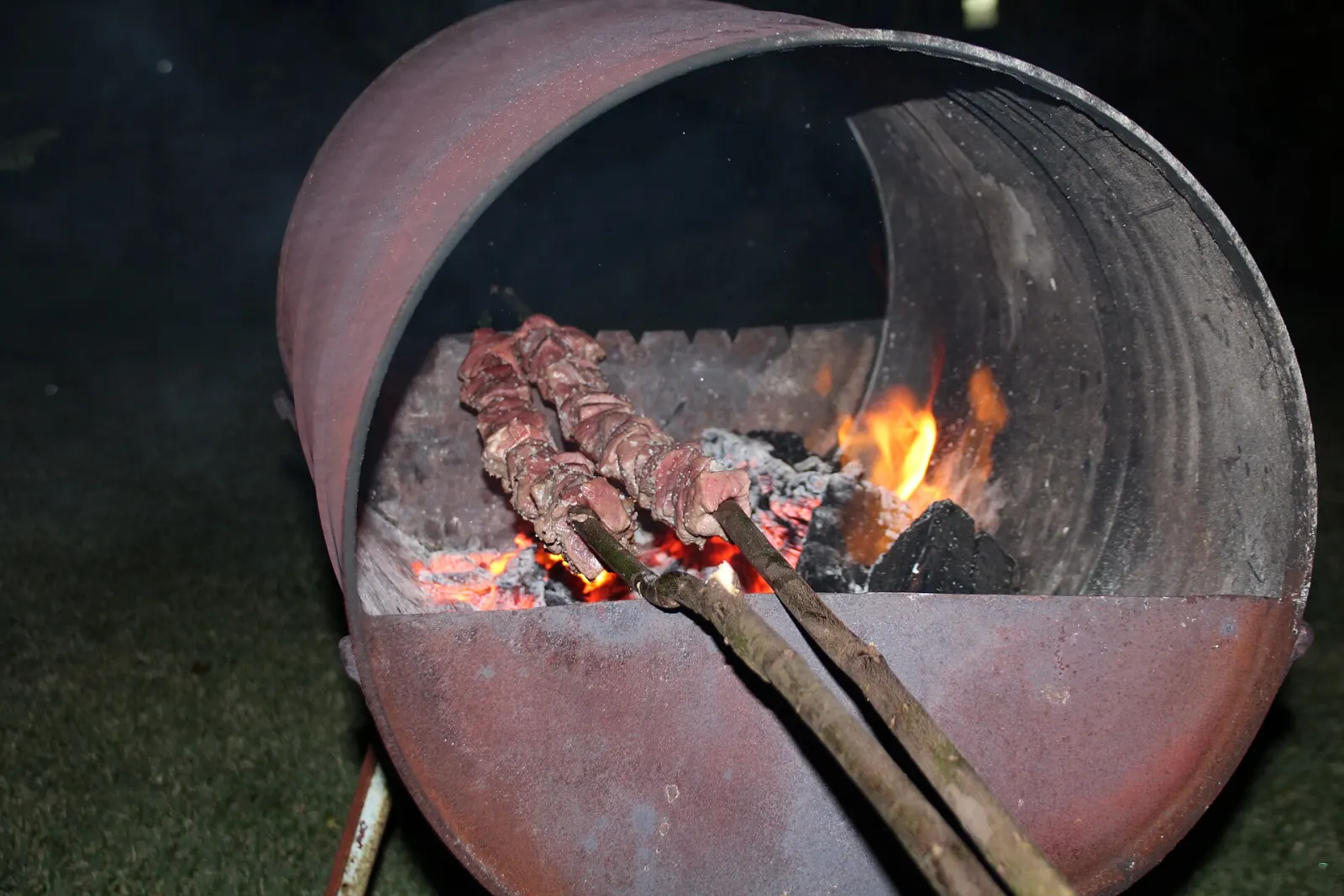
Espetada is cubes of beef seasoned with salt, pepper, garlic and bay leaf, then grilled on a skewer. The traditional skewer is a stick of bay laurel (pau de louro), though many restaurants now use iron or aluminium skewers. The dish is linked to Estreito de Câmara de Lobos, the wine-growing parish above the fishing town of Câmara de Lobos, and it is considered one of Madeira's regional specialities.
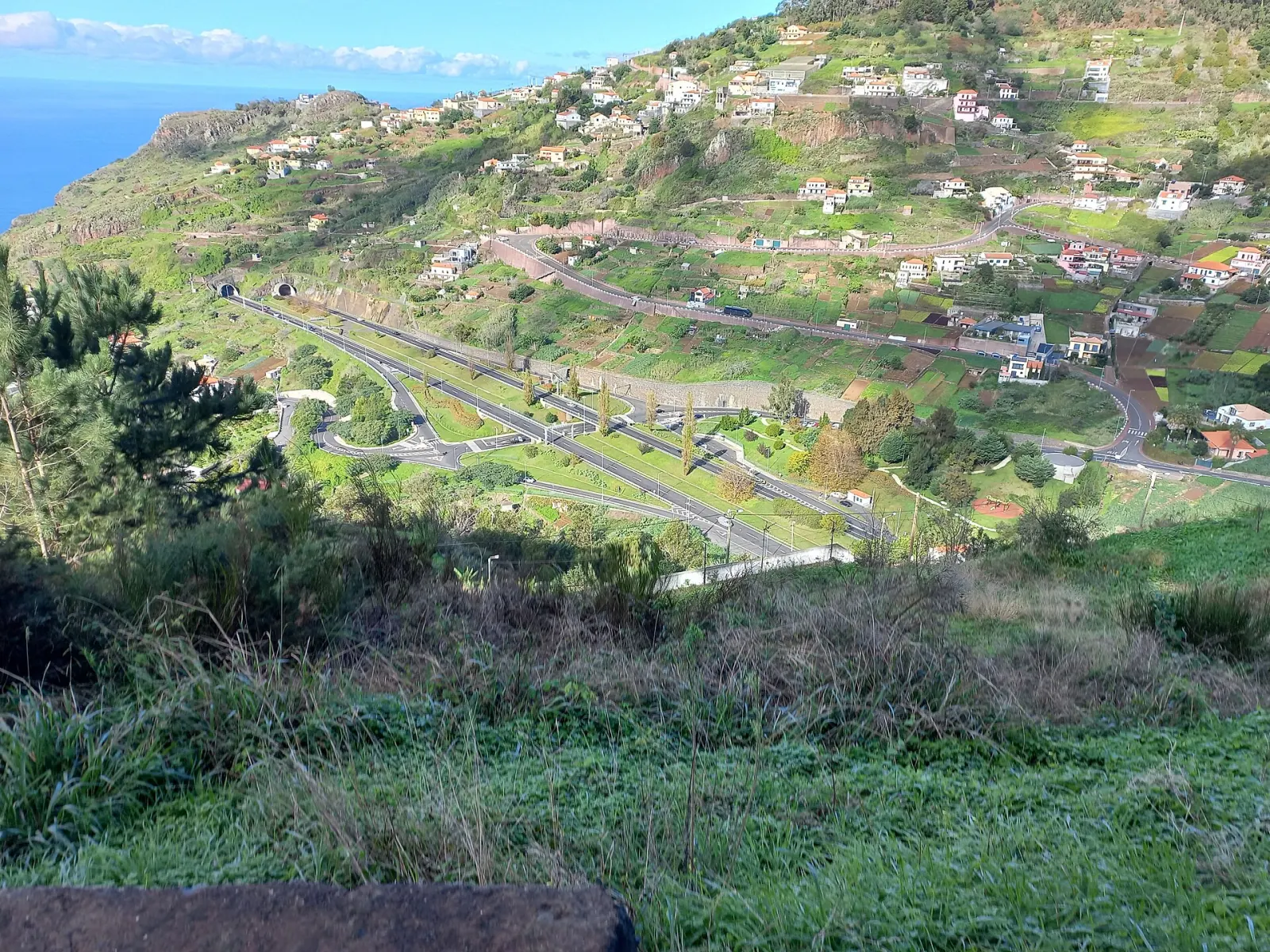
In Madeira espetada usually comes with milho frito and bolo do caco, so the three are often ordered together. If you are near Cabo Girão, you are in the same municipality as Estreito.
What is bolo do caco?
Bolo do caco is a round, flat wheat bread with an unusual ingredient: peeled, cooked and mashed sweet potato in the dough. Its name comes from the caco, the heated slab it was traditionally cooked on. That slab could be clay, basalt, terracotta or iron, heated over embers. Today metal or cement plates heated by gas are common.
It is usually eaten fresh and hot, as a starter, spread with garlic and parsley butter. It is also split and filled with meat, ham, fish or octopus. The bread is traditional to both Madeira and Porto Santo. Wheat reached the archipelago in the second half of the 15th century, at a time when cereal shortages were common, and the sweet potato may have been added to the dough for the same reason.
What is espada, and why is it served with banana?
Espada is the black scabbardfish (Aphanopus carbo), a long, dark deep-sea fish. It lives between about 180 and 1,700 m deep and grows up to 110 cm long. In Portuguese waters it has traditionally been caught with line gear, and in Madeira it is highly prized as food. Because it lives so deep, you will rarely see it alive. On fishmongers' counters it shows up as a long black fish with large eyes and sharp teeth.
The best-known way to eat it is as fillets served with fried banana (espada com banana). Madeira also grows bananas, but no reliable source dates the pairing's origin. Treat any "invented in…" story on a menu with caution. If you want to see the whole fish before it is filleted, the fish hall of the Mercado dos Lavradores in Funchal is the easiest place.
Can you still eat lapas (limpets) in Madeira?
Lapas are limpets, usually grilled in their shells in a small pan with garlic butter and lemon. Two species are harvested in Madeira: the white limpet (Patella aspera) and the black limpet (Patella ordinaria).
Their availability is regulated, and this is what most visitors do not know. Under Portaria n.º 377/2024 (4 September 2024), limpet harvesting is banned every year from 1 November to 30 April. Keeping, transporting, selling or displaying fresh limpets caught during that closed season is also banned. The same rule suspended all limpet harvesting from the day after publication until the Regional Fisheries Director lifts the suspension by dispatch. Survey dives had found that many rocky areas had almost no young limpets left.
In practice, fresh lapas may be off the menu, especially between November and April. Ask whether they are fresh and local before ordering, and respect any "not available" answer. It means the rule is working.
What is milho frito?
Milho frito is cornmeal cooked into a firm porridge, left to set, cut into cubes and deep-fried until golden. It is the usual side dish with espetada. Maize is an American crop that reached Madeira after the European voyages. No reliable source dates the dish itself.
What is poncha made of?
Poncha is Madeira's best-known drink. The base is aguardente de cana, the island's sugar-cane spirit, muddled with honey, sugar and lemon juice. Orange juice or other fruit juices are used in some versions. The wooden muddler is a Madeiran tool called a mexelote, which locals more often call a caralhinho. It is served without ice.
The spirit behind it has its own story. Sugar cane was brought to Madeira in the 15th century from Sicily, and sugar became the island's "white gold". The first cane-spirit distilleries appeared in the late 19th century. Today the cane spirit is protected as Rum da Madeira, a geographical indication covering Madeira and Porto Santo. It may only be made by fermenting and distilling sugar-cane juice, it has a minimum strength of 37.5% vol, and it is certified by the Instituto do Vinho, do Bordado e do Artesanato da Madeira (IVBAM).
Poncha tastes sweet but carries rum-strength alcohol. Do not drink it before driving or before a mountain hike.
What makes Madeira wine different?
Madeira is a fortified wine: grape spirit is added to stop it spoiling. Its character comes from history. Ships bound for the East Indies and the New World loaded wine in Madeira. The heat and movement of the voyage changed its flavour, and casks that returned were sold as vinho da roda ("round-trip wine"). Producers later recreated that effect on the island in two main ways:
- Estufagem: the wine is heated artificially, most commonly in heated tanks (cuba de calor) for a regulated minimum of 90 days.
- Canteiro: used for higher-quality wines, which age in casks in warehouses warmed only by the island's climate.
Four "noble" white grapes give the classic styles, from driest to sweetest: Sercial, Verdelho, Boal and Malvasia (Malmsey). The red Tinta Negra is the workhorse, used for about 85% of production.
| Label | Minimum age |
|---|---|
| Reserve | 5 years |
| Special Reserve | 10 years |
| Extra Reserve | over 15 years |
| Colheita (single harvest) | 5 years in cask |
| Frasqueira / Vintage | 19 years in cask + 1 in bottle |
Because the wine is already oxidised and heat-aged, an opened bottle keeps far longer than ordinary wine, which makes it a practical gift to take home.
What is bolo de mel, and why is it broken by hand?
Bolo de mel is a dark, dense cake made with mel de cana (sugar-cane honey, a by-product of the cane industry) rather than bee honey. It also contains spices such as fennel seed, cinnamon and cloves, together with walnuts, almonds, citrus and Madeira wine. Its origins go back to the peak of sugar production in the 15th and 16th centuries.
It is a Christmas tradition. Many families bake it on 8 December, the feast of Nossa Senhora da Conceição, which marks the start of the Christmas preparations. Custom says it is broken by hand, never cut with a knife. Thanks to its high sugar content, it keeps for months. To protect the real thing, a regional mark and authentication seal, "Bolo de Mel de Cana da Madeira", was created under Decreto Legislativo Regional n.º 20/2006/M. Look for it if you are buying one to take home.
When are the food and wine festivals?
The official regional events calendar, published by the Direção Regional do Turismo and subject to change, lists for 2027:
- Madeira Gastronomic Festival – SAL: 9–18 July 2027
- Madeira Wine Festival: 22 August–12 September 2027, including a live harvest in Estreito de Câmara de Lobos on 11 September
Where can you see these ingredients in one place?
The Mercado dos Lavradores in Funchal gathers the raw materials of this guide under one roof: fruit and vegetables, and a fish hall where black scabbardfish is sold. It is a good first stop before you order any of these dishes.
Sources and fact-checking
Facts checked against the sources below on 28 October 2026. How we work
- Wikipédia (pt) — Espetada
- Wikipédia (pt) — Bolo do caco
- Wikipédia (pt) — Bolo de mel
- Wikipedia — Madeira wine
- Visit Madeira — Rum da Madeira (official tourism site)
- JORAM — Portaria n.º 377/2024 (limpet harvesting rules)
Photos: GerritR (CC BY-SA 4.0)